Anthropic Put Claude's AI Agents on a Meter: What the June 15 Credit Change Actually Costs You
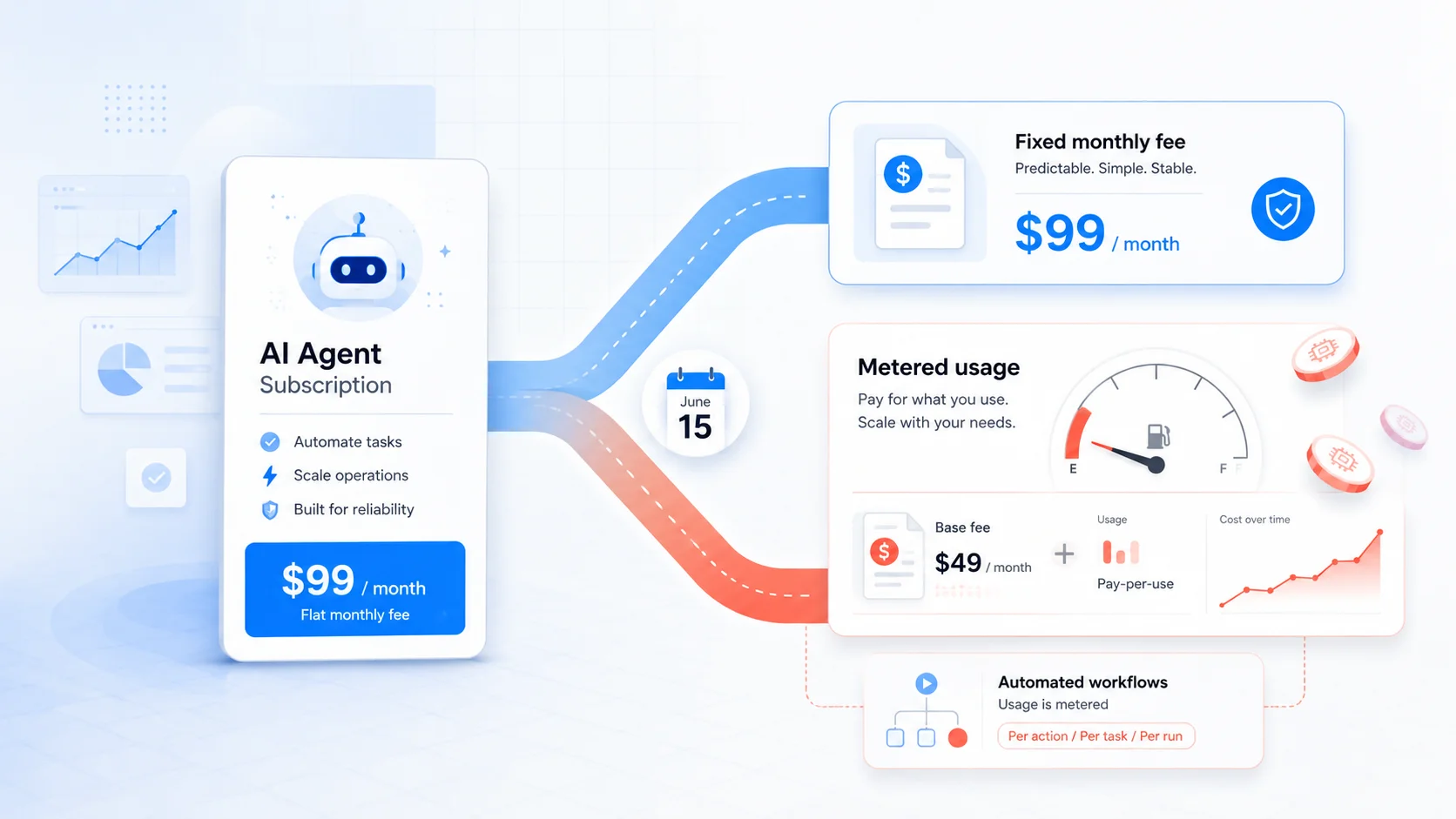
Table of Contents
If you pay $20 a month for Claude Pro and you only ever chat with it in a browser, you can stop reading after this sentence: nothing about your bill changes on June 15. For everyone else, the people who run Claude inside scripts, agents, CI pipelines, and Claude Code automations, the deal you signed up for is quietly being rewritten.
On June 15, 2026, Anthropic pulls programmatic Claude usage out of your flat subscription and puts it on a separate monthly credit, billed at standard API rates, with no rollover. Your interactive chat stays exactly as it was. Your automations move onto a meter. That is the whole story, and the difference between those two sentences is where the money is.
This post breaks down precisely what is being metered, what is not, how much credit each plan gets, who actually ends up paying more, and the short checklist to run before June 15 so the change does not surprise you mid-month.
Last reviewed: June 3, 2026. Details reflect Anthropic's announcement and dated reporting as of this date. The change takes effect June 15, 2026. AI pricing and usage rules move fast, so confirm the current terms on Anthropic's official pricing and Claude Code billing pages before you act.
Methodology & Source Note:
The structure of the change, the affected surfaces, and the per-plan credit amounts are sourced from Anthropic's mid-May 2026 announcement and dated reporting from InfoWorld, The Decoder, and TechTimes (linked in Sources). The cost scenarios further down are illustrative calculations built for this post to show how the new credit pool behaves at light, moderate, and heavy usage. They are not Anthropic figures and your real token consumption will vary widely by model, task, and how your agents are configured. I write this as a developer who uses Claude Code daily, not as a neutral observer.
What Actually Changes on June 15
Anthropic announced in mid-May 2026 that, starting June 15, programmatic use of Claude stops drawing from your normal Pro, Max, Team, or Enterprise subscription limits. Instead, that usage draws from a separate monthly pool of dollar credits, and those credits are spent at standard API token rates.
The framing that matters: a Claude subscription used to be a flat all-you-can-use deal within rate limits, no matter whether you were typing in a chat box or running an automated agent. After June 15, the subscription splits into two lanes. One lane (interactive use) keeps the old flat behavior. The other lane (programmatic use) becomes pay-per-token, capped by a monthly credit, with a hard stop when the credit runs out.
Three details make this more than a cosmetic change:
- The credits are billed at API rates. This is not a discounted "subscriber" token price. It is the same metered rate an API customer pays.
- There is no rollover. Unused credit does not carry into next month. Use it or lose it.
- There is a hard stop. When the monthly credit is gone, automated requests stop entirely unless you have manually turned on overflow billing. There is no silent fallback to your subscription.
What Is Metered and What Is Not
This is the single table to screenshot. Almost every "wait, am I affected?" question comes down to which lane your usage falls into.
| How you use Claude | After June 15 |
|---|---|
| Claude.ai web, desktop, and mobile chat | Unchanged (subscription) |
| Interactive Claude Code in your terminal | Unchanged (subscription) |
| Claude Cowork | Unchanged (subscription) |
| Claude Agent SDK | Metered (credit pool) |
| claude -p (non-interactive / headless mode) | Metered (credit pool) |
| Claude Code GitHub Actions | Metered (credit pool) |
| Third-party apps authenticating via the Agent SDK | Metered (credit pool) |
The mental shortcut: if a human is sitting there typing and reading, it is still flat. If Claude is running on its own, in a script, an agent, a scheduled job, or a CI workflow, it is now metered. The line is interactive versus programmatic, not "in the terminal versus in the browser." That trips people up, because interactive Claude Code in your terminal stays on the subscription, but the same Claude Code invoked headlessly by a GitHub Action does not.
How Much Credit Each Plan Gets
The monthly programmatic credit roughly mirrors what your plan already costs. So your flat fee is unchanged, and you get a metered budget on top that happens to equal it.
| Plan | Monthly price | Programmatic credit |
|---|---|---|
| Pro | $20 | $20 / month |
| Max 5x | $100 | $100 / month |
| Max 20x | $200 | $200 / month |
| Team / Enterprise | Per seat | Separate credit that mirrors the plan |
Read that table carefully, because it is easy to misread as "free extra money." It is not. The credit is a ceiling, not a bonus. Before June 15, a Pro subscriber running a chatty agent overnight was covered by the flat $20 and the standard rate limits. After June 15, that same agent run is drawn down from a $20 metered pot at API prices, and when the pot is empty, the agent stops. The flat fee did not buy less chat. It stopped subsidizing your automation.
Who Actually Ends Up Paying More
This is where the "it depends" becomes concrete. Match yourself to one of these three profiles.
Profile 1: The chat-only user
You use Claude in the browser or app, maybe interactive Claude Code now and then. You never touch the Agent SDK, never run claude -p, and have no GitHub Actions wired up.
Impact: none. Your $20 (or $100, or $200) buys exactly what it did before. You can close this tab. Genuinely.
Profile 2: The light automation user
You run the occasional headless script, a personal automation, or a GitHub Action on a small repo. Your programmatic usage is real but modest.
Impact: probably none, but now there is a cap. If your automated token spend in a month stays under your credit (for example, under $20 on Pro), you pay nothing extra. The catch is that you are now living inside a ceiling you did not have before, with a hard stop at the end of it. The risk is not a bigger bill; it is an automation that silently stops on the 27th of the month.
Profile 3: The heavy agent / CI user
You run agents daily, your CI pipeline calls Claude on every pull request, or you have built something on top of the Agent SDK that runs unattended. This is the profile the change is really aimed at.
Impact: real money, and a decision to make. Heavy programmatic workloads can burn through a monthly credit quickly at API rates. Once it is gone, you either accept that your automations halt until the next cycle, or you enable overflow billing and pay API rates for everything beyond the credit. For a workload that used to feel "free" inside a $20 subscription, the true cost can land well above the flat fee. The exact number depends entirely on your token volume, which is why the next section is an example, not a promise.
An Illustrative Cost Example
Numbers make this real, so here is a deliberately simple, clearly-labeled example. Treat the token figures as placeholders for whatever your own usage turns out to be.
Say a CI automation reviews pull requests and, across a busy month, processes roughly 40 million input tokens and generates 8 million output tokens on a mid-tier model priced around $3 per million input and $15 per million output (confirm current model rates on Anthropic's pricing page before trusting any of this).
| Line | Calculation | Cost |
|---|---|---|
| Input tokens | 40M x $3 / M | $120 |
| Output tokens | 8M x $15 / M | $120 |
| Programmatic total | Before any credit | $240 |
On a Pro plan, the $20 credit covers a sliver of that, and the remaining roughly $220 either stops your automation or, with overflow billing on, lands on your card. The same workload that felt included in a $20 subscription in May is a $240 metered line item in July. That is the structural shift in one example: the headline subscription price held, but a chunk of what it used to cover is now sold by the token.
The honest flip side: if your real programmatic usage is small, this math never bites you, and the credit quietly absorbs it. The only way to know which camp you are in is to look at your actual usage, which is the entire point of an audit.
Why This Matters Beyond Anthropic
This is not a one-off. It is the same direction GitHub Copilot took when it moved to usage-based billing, and it is the pattern to expect across AI tooling: a friendly flat subscription for casual use, plus a metered layer once you actually automate at scale. The flat price is the customer-acquisition headline. The meter is where heavy use gets priced honestly.
For anyone tracking subscriptions, this breaks a comfortable assumption. AI used to be a clean, predictable line item: a stack of $20 flat fees you could add up once and forget. The metered model turns part of that into a variable cost that can swing month to month based on how much your agents ran. A predictable subscription quietly becomes a hybrid bill, and hybrid bills are exactly the kind that drift without anyone noticing. We have written before about how AI subscriptions became the new streaming stack in my 2026 AI subscription audit and whether the base tiers even earn their keep in the rise of AI subscriptions. This change is the moment the "set it and forget it" version of that stack stops being safe.
What To Do Before June 15: A 5-Step Check
You do not need to overreact. You need to know your own usage and make a deliberate call instead of getting surprised. Here is the run-through.
- Find out if you are even affected. Ask one question: do I run Claude programmatically (Agent SDK,
claude -p, GitHub Actions, or a third-party app on the SDK)? If no, you are done. If yes, continue. - Check your recent programmatic usage. Look at how much your automations actually consumed over the last month. Compare that token spend against your plan's credit ($20 Pro, $100 Max 5x, $200 Max 20x). This tells you whether you are Profile 2 (under the cap) or Profile 3 (over it).
- Decide your overflow stance on purpose. If you exceed the credit, choose deliberately: let automations hard-stop when the credit runs out, or enable overflow billing and accept API-rate charges. Do not let the default decide for you. A hard stop on a production pipeline and a runaway overflow bill are both bad surprises, just in opposite directions.
- Right-size the plan. If you are a heavy programmatic user on Pro, a Max tier's larger credit may be cheaper than paying overflow at API rates. If you are a light user paying for Max mostly out of habit, this is a good prompt to step down. Match the tier to your real automated workload, not your aspirations.
- Log it as a hybrid cost in SubBuddy. Record the flat subscription as its fixed monthly amount, then track the metered overflow as a separate variable line so your AI spend reflects reality. Set a renewal alert and a monthly budget check so a $20 plan that quietly became a $120 month does not slip past you.
Tracking a Subscription That Now Has Two Halves
The reason this deserves a spot in your tracker, and not just a mental note, is that it is now two costs wearing one name. The flat part is predictable. The metered part is not, and unpredictable recurring costs are precisely the ones that creep. If you only log "Claude Pro, $20," you will understate what you actually pay in any month your agents were busy.
The fix is the same discipline we apply to any usage-based bill: separate the fixed floor from the variable layer, set a monthly budget for the variable part, and review it on a schedule instead of at the moment the card gets charged. That is how a small, creeping overflow becomes a number you decided on rather than one you discover. If you want to see whether other charges in your stack have quietly gone variable on you, the bank statement audit is the natural next step, and the "death by $5" trap covers why small recurring costs are the dangerous ones.
The Quick Checklist
- Chat-only or interactive-terminal user? You are unaffected. Do nothing.
- Confirm whether you use the Agent SDK,
claude -p, or Claude Code GitHub Actions. - Compare last month's programmatic spend against your plan credit ($20 / $100 / $200).
- Choose your overflow stance on purpose: hard stop or pay API rates.
- Right-size your tier to your real automated workload before June 15.
- Log Claude as a hybrid cost: fixed subscription plus variable overflow.
- Set a monthly budget check so a metered month does not surprise you.
Sources
- InfoWorld: Anthropic puts Claude agents on a meter across its subscriptions
- The Decoder: Claude subscriptions get separate budgets for programmatic use, billed at full API prices
- TechTimes: Anthropic ends subscription subsidy for agents June 15
- Anthropic: Claude plans and pricing (official)
- GitHub: Copilot is moving to usage-based billing (industry precedent)
Alex Coca
Founder & CEO of SubBuddy and a daily Claude Code user. Alex writes practical subscription frameworks for people who want to pay for what they use and stop subsidizing what they don't.
Track Your Claude Bill Before It Goes Variable
Log your Claude subscription as a fixed cost and its metered overflow as a separate variable line in SubBuddy, then set a monthly budget check so a $20 plan that quietly became a $120 month never slips past you.
Start Tracking FreeRelated Articles

I Audited My AI Subscriptions in 2026: Which Tools Are Actually Worth Paying For?
The Claude credit change is exactly why AI subscriptions need auditing. Here is the keep, cancel, or rotate framework I ran across my whole AI stack.

The Rise of AI Subscriptions: Is Your ChatGPT Plus Worth It?
As AI tools shift from flat fees to metered billing, the question of whether each subscription earns its keep gets sharper. Here is how to judge.
2026 Subscription Price Hike Tracker: Every Service That Raised Prices This Year
Metered AI billing is one more way 2026 costs crept up. This tracker logs every confirmed increase so you know exactly what is costing you more.