Google Just Cut Gemini's Price and Reshuffled Every Tier: The June 2026 AI Plan Map
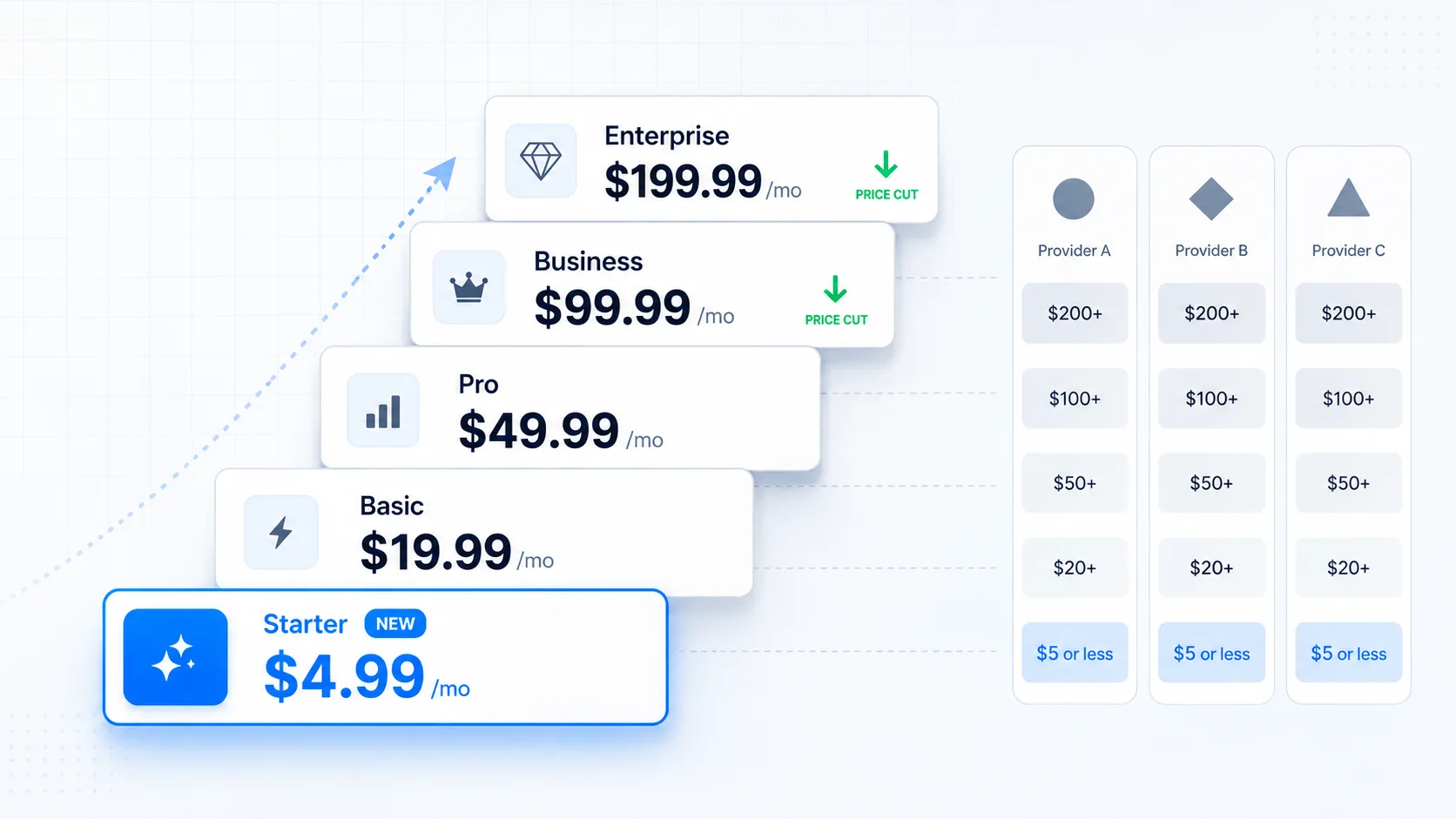
Table of Contents
Most subscription stories in 2026 have been about prices going up. This one runs the other way, which is exactly why it is easy to misread. Over about four weeks, Google did not just lower one Gemini price. It rebuilt the whole ladder: it added a tier, cut its flagship, slashed its entry plan, and folded a YouTube Premium subscription into the top of the stack. The result is cheaper on paper and more confusing in practice.
If you pay for Gemini, or you are weighing it against ChatGPT and Claude, the question is no longer "is it cheaper." It is "which of the five Gemini tiers actually matches what I do, and am I about to pay for usage and bundles I will never touch." This post lays out the full June 2026 plan map, lines every tier up against the equivalent Claude and ChatGPT plan, and gives you a cost-per-use way to choose.
Last reviewed: June 16, 2026. Prices reflect Google's published US rates as of this date. The Ultra changes were announced at Google I/O on May 19, 2026, and the AI Plus cut landed in June 2026. AI pricing moves fast, so confirm the current numbers on Google's official Google One / AI subscription pages before you act.
Methodology & Source Note:
Tier names, prices, storage amounts, and usage multipliers are sourced from Google's official Google One AI subscription post and dated reporting on the I/O 2026 announcement and the June AI Plus cut (linked in Sources). The cross-provider comparison uses each company's published consumer pricing as of June 16, 2026. The "cost per use" framing and the tier-picking decision rules are mine, built for this post, not Google figures. All prices are US monthly rates for standard plans. I write this as a developer who pays for AI tools out of pocket and tracks them like any other recurring bill.
What Google Actually Changed
Two separate announcements got blurred together in the coverage, so it helps to keep them apart.
1. At Google I/O on May 19, 2026, Google reworked the top of the ladder. It launched a new AI Ultra tier at $99.99 a month (5x the usage limits of AI Pro), and it cut the existing flagship AI Ultra from $249.99 to $199.99 a month while keeping its 20x usage and its perks. So the top of the stack went from one expensive plan to two: a mid-heavy plan at roughly $100 and a flagship at roughly $200.
2. In June 2026, Google cut its entry paid plan, AI Plus, from $7.99 to $4.99 a month, and doubled the included cloud storage from 200GB to 400GB. That move undercuts every other major AI subscription at the low end and is clearly aimed at converting free users into the cheapest possible paid habit.
Put together, Gemini now has a five-rung ladder where it recently had three meaningful rungs. More choices is not the same as a better deal, and the gap between the rungs is where people overpay.
The Full Gemini Plan Map: June 2026
Here is every current Gemini tier, what it costs, and what actually distinguishes it. Usage multipliers are relative to the tier below them, the way Google frames them.
| Tier | Price | Storage | What sets it apart |
|---|---|---|---|
| Free | $0 | 15GB (shared) | Basic Gemini access with daily caps |
| AI Plus | $4.99/mo (was $7.99) | 400GB (was 200GB) | Roughly 2x Free usage, cheapest paid entry of any major AI app |
| AI Pro | $19.99/mo | 5TB | Roughly 4x Free usage, AI features in Gmail and Docs, the standard "serious user" plan |
| AI Ultra (5x) | $99.99/mo (new) | 20TB | 5x Pro usage, priority model access, YouTube Premium individual bundled in |
| AI Ultra (20x) | $199.99/mo (was $249.99) | 30TB | 20x Pro usage, earliest access to new models and experimental tools |
Two details on this table do real work later. First, the jump from AI Pro ($19.99) to the cheaper Ultra ($99.99) is a 5x price increase for a 5x usage bump, so it only pays off if you are genuinely hitting Pro's limits. Second, the $99.99 Ultra bundles a YouTube Premium individual plan, which is a real subscription you may already be paying for separately. That bundle is either a genuine saving or a quiet double-charge, depending on your current stack, and it is the kind of overlap that is easy to miss.
How Gemini Lines Up Against Claude and ChatGPT
The useful way to read AI pricing in mid-2026 is by price band, because the three big consumer providers have mostly converged on the same rungs. Here is where each one sits.
| Price band | Anthropic | OpenAI | |
|---|---|---|---|
| Free | Gemini Free | Claude Free | ChatGPT Free |
| ~$5 | AI Plus $4.99 | no direct tier | no direct tier |
| ~$20 | AI Pro $19.99 | Claude Pro $20 | ChatGPT Plus $20 |
| ~$100 | AI Ultra 5x $99.99 | Claude Max 5x $100 | no direct consumer tier |
| ~$200 | AI Ultra 20x $199.99 | Claude Max 20x $200 | ChatGPT Pro $200 |
The headline from this grid: at every band above free, the three providers are within a few dollars of each other, so price is rarely the real deciding factor above $20. The exception is the ~$5 band, where Google now stands alone. If your honest need is "a bit more than free, and I do not care which model brand," Google's $4.99 AI Plus has no equivalent from Anthropic or OpenAI right now. That is the one genuinely new pricing fact in this whole reshuffle.
The Cost-Per-Use Test: Picking a Tier Instead of a Brand
Spec sheets push you up the ladder. A cost-per-use check pushes you toward the tier you will actually exhaust. The method is simple and it works for any of the three providers.
- Count your real sessions. Over a normal week, roughly how many times do you open an AI tool and use it for something that matters? Be honest. "I might use it more" is not usage.
- Find the cheapest tier you would not hit the wall on. If you never see a rate-limit or "come back later" message on a $20 plan, a $100 plan cannot save you anything. Its only job is to remove a ceiling you are not touching.
- Divide the price by the sessions. A $20 plan you use 60 times a month costs about 33 cents a session. A $100 plan you use the same 60 times costs $1.67 a session for, in practice, the identical output. You are paying five times as much for headroom you do not use.
This is the test that keeps people off the $99.99 and $199.99 tiers unless they belong there. The Ultra plans are not bad value. They are bad value for the large majority of people who buy them because the number felt "professional." The only users who come out ahead on Ultra are the ones who routinely hit Pro's limits, run heavy multi-step work, or genuinely need the bundled extras.
Which Gemini Tier Fits You
Match yourself to one of these, then stop.
The "slightly more than free" user: AI Plus ($4.99)
You hit Free's daily caps now and then and just want them to go away, plus some extra storage. At $4.99 this is the lowest-friction paid AI plan on the market. It is also the right answer for a lot of people currently paying $20 out of habit who never actually use $20 of capability.
The daily serious user: AI Pro ($19.99)
You use AI most days for real work: writing, coding help, research, email and document features. This is the band where Gemini, Claude, and ChatGPT are nearly interchangeable on price, so choose on which model you prefer and which app you already live in, not on a few dollars.
The heavy or professional user: AI Ultra 5x ($99.99)
You actually hit Pro's limits, run long agentic or multi-step tasks, or want the bundled YouTube Premium individual plan and would otherwise pay for it anyway. Only count the bundle as savings if you are currently paying for YouTube Premium separately. If you are not, it is not a discount, it is an upsell.
The power user: AI Ultra 20x ($199.99)
You are at the frontier: maximum usage, earliest access to new models, experimental tools. If you have to ask whether you need this tier, you do not. The people who belong here already know.
Is This Really a Price Cut, or a Reshuffle?
Both, and the distinction matters for your wallet. The genuine cuts are real: AI Plus is $3 cheaper with double the storage, and the flagship Ultra is $50 cheaper. If you were already on those plans, you save money for doing nothing, which is rare in 2026 and worth pocketing.
The reshuffle is the part to watch. By inserting a $99.99 tier between $19.99 and $199.99, Google created a new, very visible "step up" that did not exist before. Pricing ladders are designed this way on purpose. A middle option makes the tier below it feel modest and the tier above it feel extravagant, nudging people to the new middle. The cheaper flagship does similar work: $199.99 reads as a deal next to the old $249.99, even for someone who would never have paid either. None of this is sinister, but it means the right response is not "great, everything is cheaper, I will upgrade." It is "which rung do I actually use," which is the question the ladder is built to make you skip.
What To Do This Week: A 4-Step Check
- Write down your current AI plans and prices. All of them: Gemini, ChatGPT, Claude, Copilot, anything else. Most people underestimate this total because the charges are spread across cards and app stores.
- Run the cost-per-use test on each. Sessions per month divided into the price. Flag anything over about $1 a session that you could replace with a cheaper tier you would not outgrow.
- Hunt for bundle overlap. If you are eyeing the $99.99 Ultra for its YouTube Premium, check whether you already pay for YouTube Premium. If you do, the bundle is a real saving. If you do not, ignore it. The same logic applies to any "free" add-on inside a plan.
- Right-size, do not auto-upgrade. Move down to AI Plus if Pro is overkill. Stay on Pro if Ultra is vanity. Only step up if you are genuinely hitting a wall you can name.
Why This Belongs in Your Subscription Tracker
AI plans used to be the easy part of a subscription audit: a couple of flat $20 fees you could add up once. That is over. Between Gemini's five tiers, Anthropic moving programmatic Claude usage onto a metered credit, and bundles like YouTube Premium getting tucked inside AI plans, AI spend is becoming a moving target with overlapping pieces. We covered the metered shift in detail in Anthropic putting Claude's agents on a meter, and the broader keep-cancel-rotate exercise in my 2026 AI subscription audit.
The practical move is to treat each AI plan like any other recurring bill: record the exact tier and price, note any bundled subscription inside it so you do not pay for the same thing twice, set a renewal reminder, and re-run the cost-per-use test every few months as these prices keep shifting. A reshuffle like this one is precisely the moment to check, because the plan you signed up for may no longer be the plan that fits. If you want a fast way to see whether your AI tier is worth its price, our subscription cost calculator turns a monthly fee into an annual number, which is usually the figure that changes your mind.
The Quick Checklist
- Gemini now has five tiers: Free, AI Plus $4.99, AI Pro $19.99, AI Ultra 5x $99.99, AI Ultra 20x $199.99.
- AI Plus is the cheapest paid AI plan from any major provider right now.
- Above $20, Gemini, Claude, and ChatGPT are within a few dollars, so choose on model and app, not price.
- Run the cost-per-use test before stepping up to any $100+ tier.
- Only count the bundled YouTube Premium as savings if you already pay for it.
- Log each AI plan and its bundled extras in your tracker and re-check every few months.
Sources
- Google: Everything new in our Google AI subscriptions, from I/O 2026 (official)
- TechRadar: Google undercut OpenAI with a $4.99 Gemini plan
- Digital Trends: Google's AI subscriptions get a new $100 tier, a price cut, and new features
- AI Pricing Guru: subscription tier comparison (June 2026)
- Anthropic: Claude plans and pricing (official)
Alex Coca
Founder & CEO of SubBuddy. Alex researches subscription billing, cancellation patterns, and recurring-spend workflows by building SubBuddy and reviewing real subscription audits from users and his own accounts.
Track Every AI Plan in One Place
Log Gemini, ChatGPT, Claude, and any bundled extras in SubBuddy with the exact tier and price, set renewal reminders, and re-run the cost-per-use check as AI prices keep shifting.
Start Tracking FreeRelated Articles
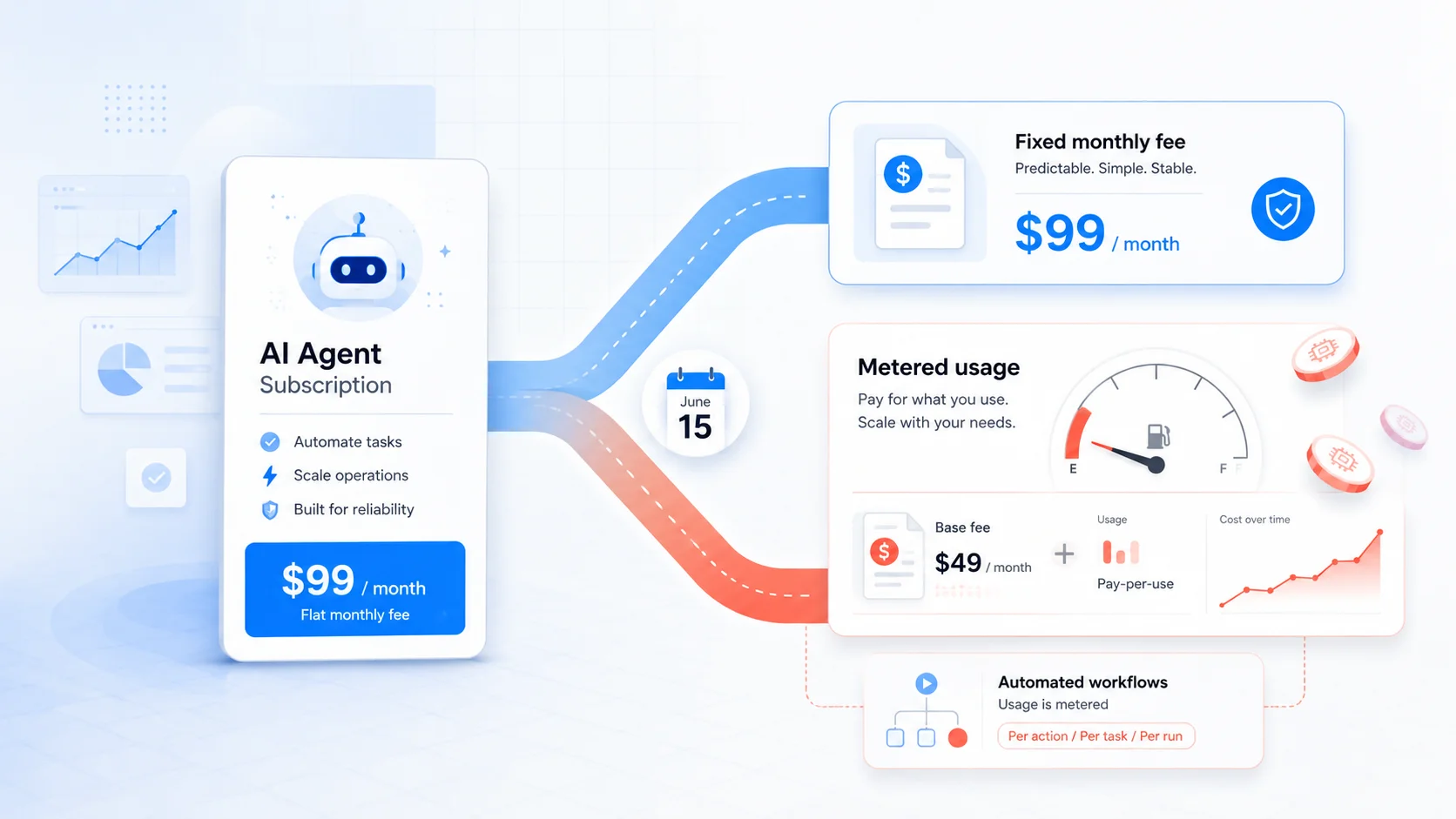
Anthropic Put Claude's AI Agents on a Meter: What the June 15 Credit Change Actually Costs You
On June 15, 2026, Anthropic moves Claude Agent SDK, claude -p, and Claude Code GitHub Actions out of your flat Pro or Max subscription and onto a separate monthly credit billed at API rates, with no rollover. Your chat stays the same. Your automations may not. Here is exactly what is metered, who actually pays more, and the before-June-15 checklist.

I Audited My AI Subscriptions in 2026: Which Tools Are Actually Worth Paying For?
AI subscriptions now stack up like streaming services. I reviewed my current AI tools, checked May 2026 pricing, and built a keep, cancel, or rotate framework for ChatGPT, Claude, Copilot, Cursor, OpenCode Go, GLM Coding Plan, and more.

The Rise of AI Subscriptions: Is Your ChatGPT Plus Worth It?
AI tools have become the fastest-growing subscription category in 2025. From ChatGPT Plus to Midjourney, we break down which AI subscriptions are worth your money and which ones you can skip.