The Household Tax: What 'Extra Member' Fees Really Cost in 2026 (And When a Separate Account Is Cheaper)
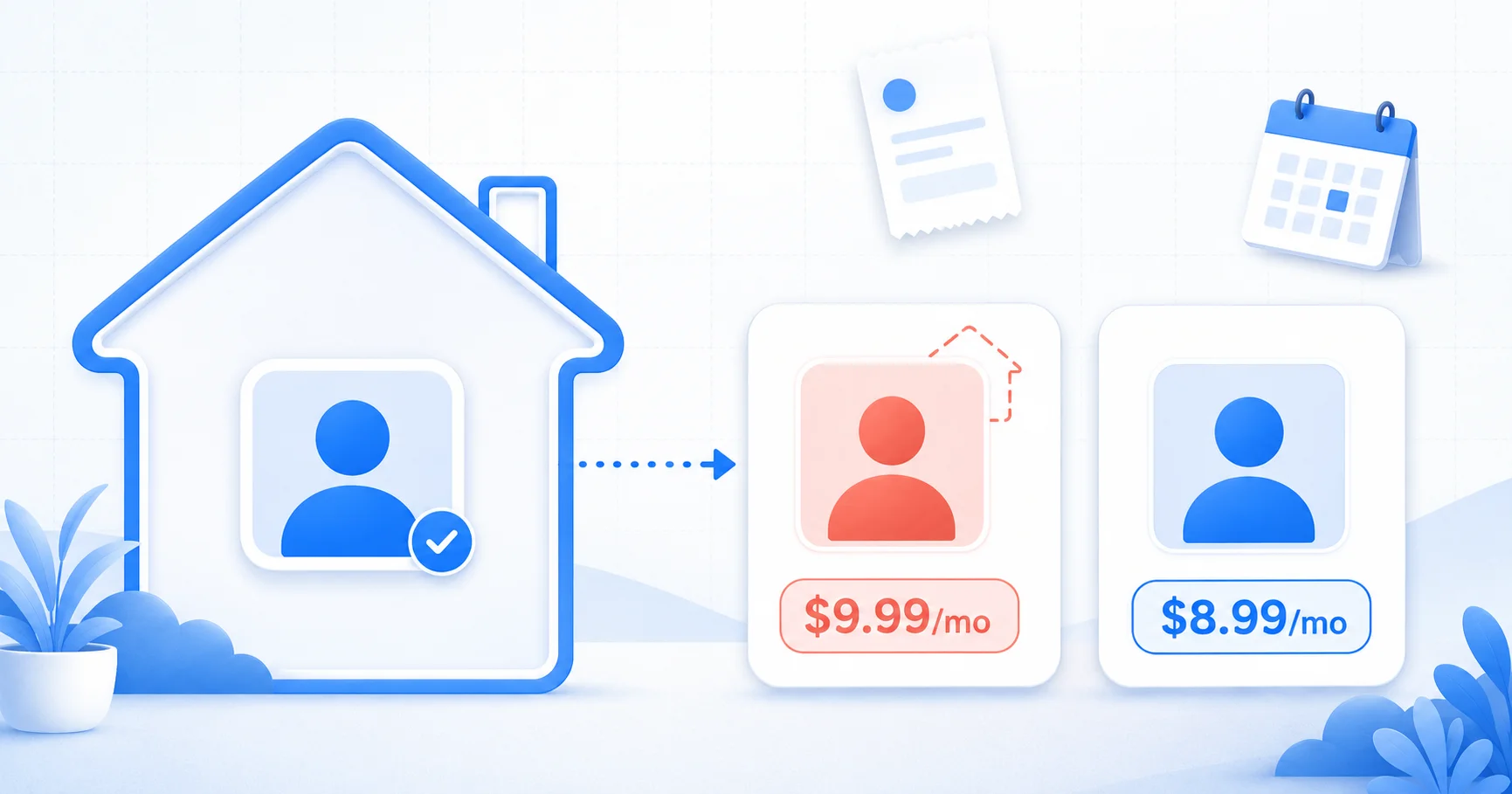
Table of Contents
For years, sharing a streaming account with your sister, your college roommate, or your parents was just something you did. One person paid, everyone watched, nobody thought about it. That quiet arrangement now has a price tag, and in 2026 it has a name on your bill: the "extra member" fee. It is the household tax, the charge streaming services add when the person you share with does not live under your roof.
The trouble is that almost nobody runs the math before clicking "add." And the math is not obvious, because the answer flips depending on the service. On one platform the extra-member slot is a genuine bargain. On another, after the latest price hike, it now costs more than buying a completely separate account. This post lays out the June 2026 numbers for every major service that charges for sharing, gives you a one-line break-even rule, and flags the services that do not even offer the option, so you stop overpaying for a convenience that sometimes is not one.
Last reviewed: June 26, 2026. Prices are US rates published on each service's plan and help pages as of this date. Netflix raised prices in March 2026, which is what pushed the ad-free extra member to $9.99. Streaming prices and sharing rules move fast, so confirm the current number on the official plan page before you add or cancel anything.
Methodology & Source Note:
Extra-member prices, standalone plan prices, and the sharing rules are taken from Netflix and Disney+ official help pages and dated reporting on the March 2026 Netflix increase (linked in Sources). All figures are US consumer rates. The "household tax" framing, the per-year math, the break-even rule, and the decision tree are mine, built for this post. I track my own household's shared subscriptions, which is exactly why I started running this comparison instead of clicking "add" on autopilot.
What the "Household Tax" Actually Is
Every major streaming service now defines a "household" as the people and devices on one home internet connection. Share with anyone on that connection and it stays free. Share with someone outside it, a parent across town, a kid at college, a friend in another city, and the service wants to be paid for that person. There are only two ways to do it on the books:
- Add them as a paid extra member. The person gets their own profile and login, but the slot is billed to you and renews on your card. Only some services sell this.
- Buy them their own standalone account. A second, fully separate subscription, billed to whoever you choose.
That is the whole decision, and it is genuinely a decision, because an extra-member slot is not automatically cheaper than a separate account. Whether it saves you money depends entirely on the price the service set for the slot versus the price of its cheapest standalone plan. In 2026 those two numbers have drifted close enough together that on at least one major service, the "convenience" slot is now the more expensive choice.
The June 2026 Extra-Member Map
Here is where each major service stands: what an extra member costs, what the cheapest standalone account costs, and which one actually wins. All figures are monthly US rates.
| Service | Extra member | Cheapest standalone account | Which is cheaper |
|---|---|---|---|
| Netflix (ad-free slot) | $9.99 | Standard with Ads, $8.99 | Separate account, by $1/mo |
| Netflix (ad slot) | $7.99 | Standard with Ads, $8.99 | Extra member, by $1/mo |
| Disney+ (Premium slot) | $9.99 | Disney+ Basic (ads), $11.99 | Extra member, by $2/mo |
| Disney+ (Basic slot) | $6.99 | Disney+ Basic (ads), $11.99 | Extra member, by $5/mo |
| Peacock | Not offered | Separate account only | N/A |
| Paramount+ | Not offered | Separate account only | N/A |
Two things jump out of that table. First, Netflix and Disney+ landed in completely different places on the same idea. Second, two big services do not sell the slot at all, which changes your options entirely. Let me walk through each case, because the right move is different for each.
Netflix: The Slot That Costs More Than an Account
Netflix's March 2026 increase did something quietly strange. It raised the ad-free extra member from $8.99 to $9.99 a month, while the cheapest standalone plan, Standard with Ads, sits at $8.99. So the ad-free slot you bolt onto your account now costs a dollar a month more than a whole, independent account would.
Put it in annual terms, which is where it lands hardest. An ad-free Netflix extra member is $119.88 a year. A complete Standard-with-Ads account is $107.88 a year. You are paying $12 a year extra for the slot, and in exchange you get less: an extra member is limited to one stream at a time and is tied to your plan and your payment. The separate account is ad-free's opposite on ads, yes, but it is fully independent, the other person controls it, and it does not count against your household.
The ad-supported extra member is the only Netflix slot that still makes plain sense at $7.99 a month, a dollar under a standalone ad account. Even then the saving is small, and you are the one carrying the charge. The takeaway: on Netflix in 2026, the extra member is no longer the obvious money-saver people assume it is. If the person would accept ads, a separate ad-supported account is within a dollar and comes with none of the strings.
One more wrinkle for bigger families. Netflix only lets a Standard plan add one extra member; you need Premium to add a second slot. If you are trying to cover two outside-the-home people, you are really comparing a Premium upgrade plus two slots against two separate accounts or a rotation plan, and the separate-account math usually wins by a wider margin there.
Disney+: The Slot That Still Earns Its Keep
Disney+ runs the same playbook with the opposite result. Its extra member costs $6.99 a month on the ad-supported Basic plan or $9.99 on ad-free Premium, while the cheapest standalone Disney+ account, Basic with ads, is $11.99 a month. Here the slot is the clear winner.
The Basic extra member at $6.99 is $83.88 a year against $143.88 for a separate Basic account, a saving of $60 a year for the same ad-supported experience. Even the ad-free Premium slot at $9.99 beats a standalone Basic account by $24 a year, and it is ad-free on top. On Disney+, adding the extra member is the right call almost every time, as long as the other person fits the rules.
And the rules are stricter than Netflix's. A Disney+ account can have only one extra member, the person must be 18 or older, they must live in the same country, and, importantly, they cannot already hold their own active Disney+, Hulu, or ESPN subscription. If they do, the slot is off the table and a separate account is your only path.
Peacock and Paramount+: No Slot to Buy
Here is the part most "extra member" guides skip: not every service that cracks down on sharing actually sells you a way back in. Peacock restricted accounts to a single household, and Paramount+ limits sharing to one household in its terms, but as of mid-2026 neither offers a paid extra-member add-on the way Netflix and Disney+ do. Other services, including Max, have moved toward paid sharing on their own timelines, so confirm the current option on the service's own page before you assume one exists.
When there is no slot to buy, your honest options narrow to two: the other person gets their own account, or you treat the service as a rotation candidate, keeping it for a month or two when there is something to watch and dropping it the rest of the year. For a service you are only half-using anyway, rotation is usually the better answer than quietly paying for two households. This is exactly the muscle behind the subscription rotation playbook, and it is why these "no slot" services are often the first ones worth rotating out.
The Break-Even Rule (One Comparison)
You do not need a spreadsheet for this. Before you add anyone outside your home to a plan, run a single comparison:
An extra-member slot is only worth it when it costs less than the cheapest standalone account the other person would actually accept.
The phrase "would actually accept" is doing the work. If your dad genuinely does not care about ads, his "cheapest acceptable account" is the ad-supported tier, and that is the number to compare the slot against. On Netflix that comparison kills the ad-free slot, because a whole ad account is cheaper. On Disney+ the slot wins comfortably either way. If the other person insists on ad-free, raise their "acceptable" number to the ad-free standalone price and the slot usually looks better again.
Two practical adjustments to keep the comparison honest:
- Count the strings, not just the dollars. An extra-member slot is one stream, tied to your plan, billed to your card, and it disappears if you ever downgrade. A separate account has none of those limits. When the prices are within a dollar or two, the independent account is usually worth the rounding error.
- Check who is paying. If the other person is happy to pay for their own account, a standalone subscription moves the charge off your card entirely, which is worth more than a small per-month saving that stays on your bill.
The 30-Second Decision Tree
Run this for each person you share with, on each service.
- Do they live in your home? Then share for free. The household tax only applies to people outside your household, so do not pay for what is already included.
- Outside your home, and the service sells a slot (Netflix, Disney+)? Compare the slot price to the cheapest standalone tier they would accept. The lower number wins. If the slot is priced at or above a whole account, buy the separate account instead.
- The service does not sell a slot (Peacock, Paramount+)? Choose between a separate account and rotating the service in and out. For anything you only half-watch, rotate.
- Adding two or more outside people? Add the cost of the plan upgrade you need (for example, Netflix Premium for a second slot) to the slot cost, then compare against separate accounts or a rotation plan. At two people, separate accounts usually win.
What Not To Do
- Do not buy an ad-free extra member out of habit. On Netflix in 2026 it costs more per year than a whole ad-supported account. Habit is exactly what the pricing counts on.
- Do not stack a slot on a service you already rotate. If you drop a service half the year, paying year-round for a second household on it makes no sense.
- Do not forget the slot is yours to track. It renews on your card, not theirs. That is one more recurring line that can quietly survive long after the person stops watching.
- Do not assume the option exists. Peacock and Paramount+ enforce one household without selling a way back in, so check before you go looking for a button that is not there.
What To Do This Week
- List who you share each service with and mark whether each person lives in your home. The in-home shares are free and you can stop worrying about them.
- For each outside-the-home person, look up two numbers: the extra-member price and the cheapest standalone tier they would accept.
- Apply the break-even rule and switch the ones where a separate account is cheaper or where the other person will pay their own way.
- Log every extra-member slot you keep as its own line with its renewal date, because it is billed to you and it is easy to forget.
Why This Belongs in Your Subscription Tracker
Extra-member fees are sneaky for the same reason every quiet subscription cost is sneaky: they hide inside a service you already approved. The slot does not show up as a new subscription on your statement, it shows up as a slightly bigger Netflix or Disney+ charge, and a slightly bigger charge is exactly the kind of thing a casual glance skips over. Months later you are still paying for a college kid who graduated and moved onto their own plan.
The fix is the same discipline that catches every other creeping charge: record each extra-member slot as its own line, note who it is for and when it renews, and re-check at renewal. If you want to turn a per-month slot price into the annual figure that actually drives the decision, our subscription cost calculator does the multiplication for you. From there, the broader true cost of streaming breakdown and the 2026 price hike tracker show how these slot increases fit into the wider squeeze, and the streaming wars guide helps decide which services earn a shared slot at all.
The Quick Checklist
- The household tax is the extra-member fee for sharing with someone outside your home.
- After March 2026, Netflix's ad-free extra member is $9.99/mo, more than a whole $8.99 ad-supported account.
- Disney+ extra members ($6.99 Basic, $9.99 Premium) still beat a standalone $11.99 account.
- Peacock and Paramount+ enforce one household but do not sell an extra-member slot, so it is a separate account or rotation.
- Break-even rule: a slot is only worth it if it costs less than the cheapest standalone account the other person would accept.
- Whatever you keep, log it: the slot renews on your card and is easy to forget.
Sources
Alex Coca
Founder & CEO of SubBuddy. Alex writes practical subscription frameworks for people who would rather run a 30-second comparison than pay for a sharing slot on autopilot.
Track Every Extra Member Before It Renews
Log each shared slot in SubBuddy as its own line with its renewal date, so a fee you added for someone who stopped watching never quietly survives on your card.
Start Tracking FreeRelated Articles

The True Cost of Streaming in 2026: How Much Are Families Actually Spending?
Extra-member fees are one line in a much bigger bill. Here is what households are really paying across every major service in 2026.
The Subscription Rotation Playbook: How to Watch Everything for $15-30/Month in 2026
For the services that do not sell an extra-member slot, rotating in and out beats paying for two households year-round.
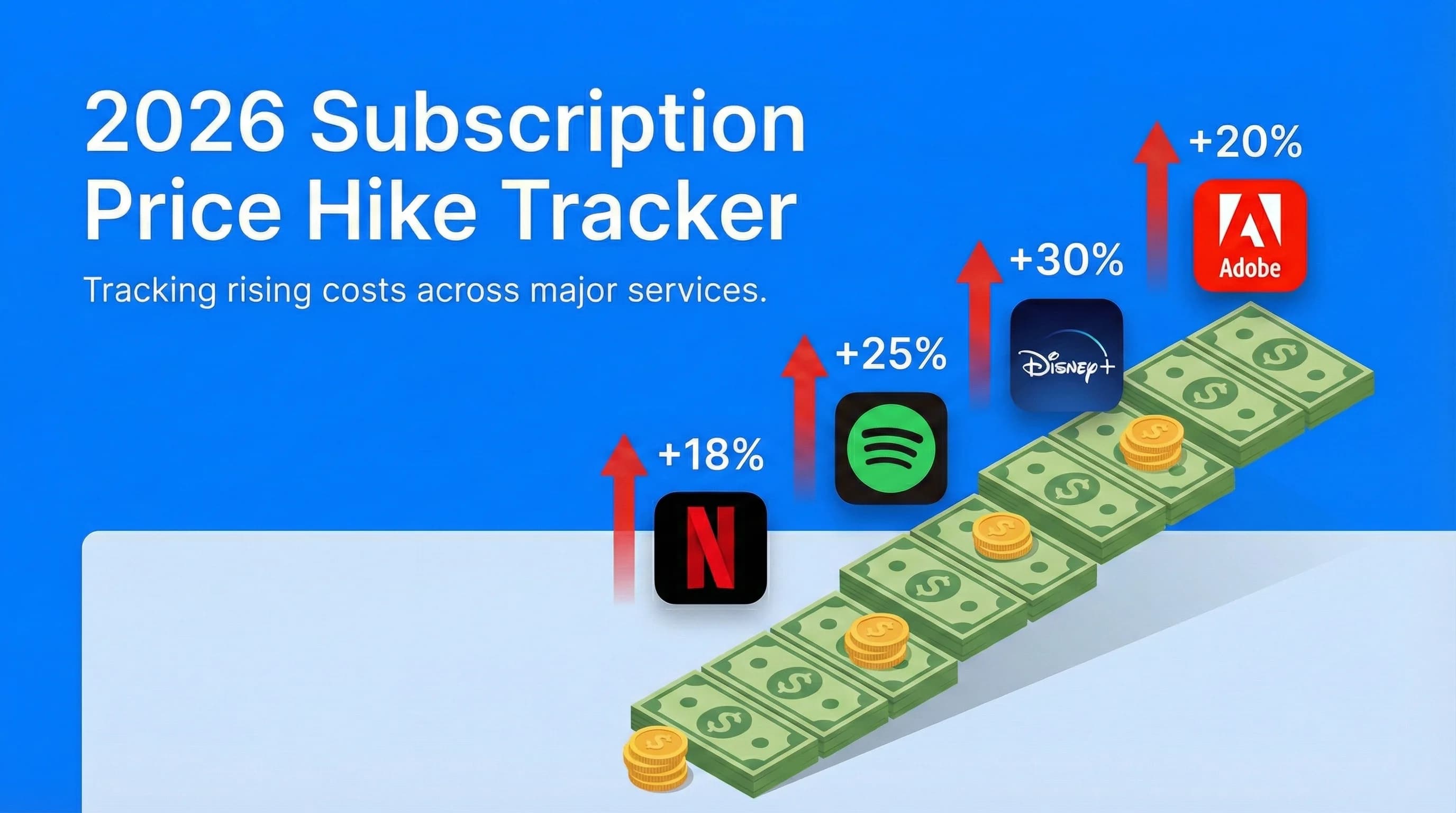
2026 Subscription Price Hike Tracker: Every Service That Raised Prices This Year
The March 2026 Netflix increase is what pushed the ad-free extra member past the price of a whole account. See every confirmed 2026 hike.