Why Subscriptions Still Charge After You Replace Your Card (and How to Stop Them)
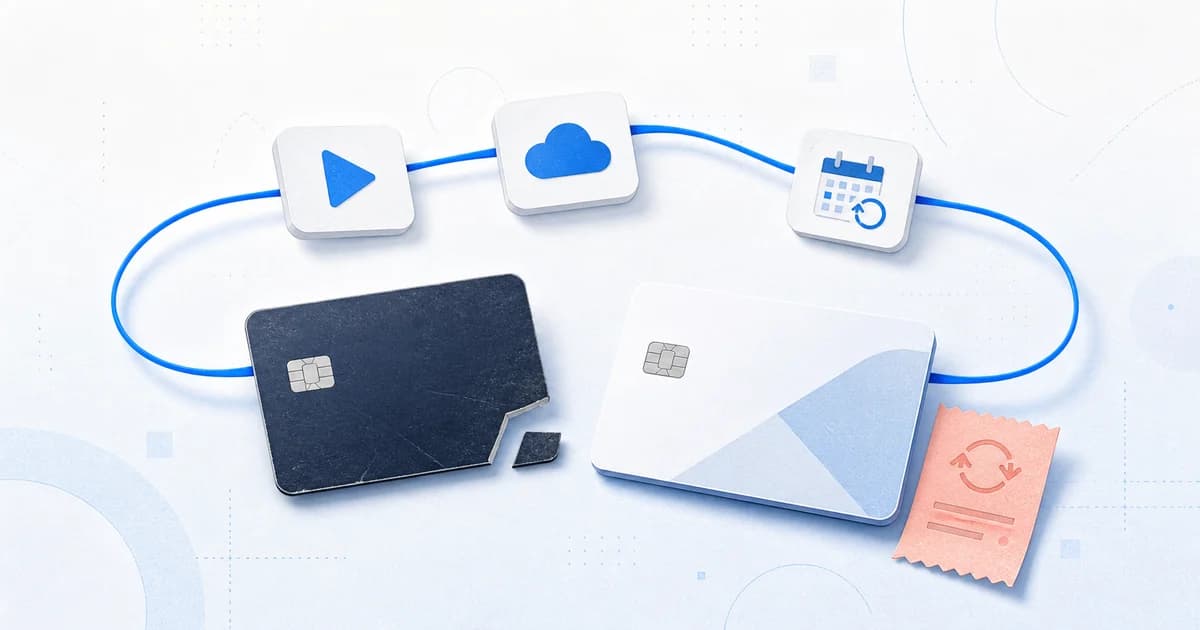
Table of Contents
No: replacing, expiring, or reissuing a payment card does not reliably stop the subscriptions attached to it. A service you authorized can sometimes keep charging because the card network and participating banks pass updated account details to eligible merchants behind the scenes.
That is why a streaming service, gym, software plan, or forgotten free trial can appear on a brand-new card even though you never typed the new number into the merchant's website. The system is designed to protect useful recurring payments from accidental interruption. It is not designed to be a cancellation button.
This guide explains the mechanism without payments jargon, shows which common tactics fail, and gives you a clean workflow for stopping a recurring charge without confusing a card replacement with a contract cancellation.
Last reviewed: August 25, 2026. Card updater participation and issuer controls vary by country, bank, card network, processor, merchant, and the reason a card was replaced. Treat the steps below as a practical workflow, not legal advice or a promise that every issuer uses the same labels.
The Short Answer: Your Plastic Changed, the Billing Relationship Did Not
When you subscribe, you authorize a merchant or billing platform to take recurring card payments under agreed terms. The visible card number is part of that setup, but it is not always a dead end when the physical card changes.
Visa says its Visa Account Updater can support account-number and expiration-date changes, including replacements for lost or stolen cards. Mastercard describes a parallel service, Automatic Billing Updater, for card-on-file and recurring payments. These services exist so your electricity payment, insurance, or favorite subscription does not fail just because a card expired.
The same convenience creates the surprise: an unwanted subscription may also survive the swap. A new card is therefore a useful audit trigger, but a poor cancellation strategy.
How Card Updater Services Work
The exact route differs between payment companies, but the practical flow is usually:
- Your issuer replaces or renews the card. The account number, expiration date, or both may change.
- The issuer makes an eligible update available through the card network. This depends on participation and the account status.
- A participating merchant or its payment processor requests or receives the update. The merchant must already have a qualifying card-on-file relationship.
- The merchant refreshes its billing record and submits the next recurring payment. You may see the charge on the replacement card without manually updating anything.
This is not universal. Some subscriptions will fail and ask you for a new card; others will continue silently. The UK's Financial Conduct Authority gives consumers the most useful plain-language summary: recurring payments may continue after you get a new card, but not always. Contact the issuer if you need to know how a specific card is handled.
Important distinction
Card replacement changes a payment credential. Subscription cancellation ends the service or renewal agreement. A recurring-payment block tells the issuer not to approve a specified payment. Those are three different actions, and sometimes you need all three.
What Does—and Does Not—Cancel a Subscription
| Action | What may happen | Does it cancel the agreement? |
|---|---|---|
| Let the card expire | The merchant may receive an updated expiration date, or the charge may fail. | No |
| Replace a lost, stolen, or damaged card | Eligible recurring merchants may receive updated credentials. | No |
| Lock or freeze the card | Some payments may be declined temporarily; issuer rules vary. | No |
| Delete the app or remove a wallet card | The billing relationship can remain active elsewhere. | No |
| Cancel through the merchant or billing platform | Future renewals should stop under the applicable cancellation terms. | Yes |
| Ask the issuer for a merchant-specific recurring-payment block | The issuer may stop future card charges, but contractual amounts can still be owed. | Not by itself |
The biggest trap is assuming payment failure equals cancellation. A gym, telecom plan, insurance policy, loan, or annual software commitment may continue to create a balance even when the card charge fails. Stopping the payment rail does not automatically erase what you agreed to pay.
How to Stop the Charge Properly
1. Find who actually owns the billing relationship
Start with the transaction descriptor, email receipt, and account settings. You may use the service's app but pay through Apple, Google Play, PayPal, Amazon, a mobile carrier, or a different email address. Cancel where the purchase was made, not merely where the service is used.
2. Cancel in writing or save an on-screen confirmation
Follow the service's official flow. Record the cancellation date, effective date, confirmation number, screenshots, and support transcript. If you need platform-specific steps, use the complete SubBuddy cancellation guide.
3. Check whether access ends now or at the end of the term
Many subscriptions stop renewing but remain usable until the paid period ends. An annual commitment can also have different terms from a month-to-month plan. Read the confirmation before assuming the next scheduled payment has disappeared.
4. Escalate when the merchant is unreachable or ignores the cancellation
Call the number on the back of the card. Ask whether the issuer can place a merchant-specific block on future recurring card payments and whether any updater or token relationship needs to be addressed. Avoid asking only for “a new card”; that describes the failed tactic, not the result you need.
5. Monitor the next two statements
Keep watching after the cancellation. Annual renewals deserve a reminder around their former charge date because a clean monthly statement does not prove that a yearly plan is gone. A bank-statement subscription audit gives you a repeatable way to check.
The 15-Minute Replacement-Card Audit
A card replacement is still useful—just reverse the usual logic. Instead of waiting to see what breaks, use it to inventory what should survive.
- List every recurring payment tied to the old card, including annual renewals.
- Mark each one Keep, Cancel, Investigate, or Move to another payment method.
- Cancel unwanted services directly and save proof.
- For services you want, wait for a payment-failure notice or proactively update critical bills such as insurance and utilities.
- Record the billing channel and next renewal date in SubBuddy.
This turns a replacement card from an unreliable “subscription reset” into a controlled migration. It also prevents the opposite problem: a critical service failing because that merchant did not receive the update.
If a Charge Returns: Pick the Right Lane
You recognize the merchant and never cancelled
The charge may be an authorized renewal. Cancel now, check the refund policy, and do not label it fraud simply because it followed the card change.
You recognize the merchant and have cancellation proof
Ask the merchant to refund the post-cancellation charge. If it refuses or does not respond, dispute the transaction with the issuer and attach the confirmation, dates, and messages.
You do not recognize the merchant or never consented
Treat it as possible fraud. Freeze the card if your bank offers that control, contact the issuer immediately through a trusted number, and follow its unauthorized-transaction process. Do not spend days trying random email addresses while more charges can arrive.
The amount is pending, not posted
A pending authorization may disappear or settle for a different amount. Tell the issuer what happened immediately, but understand that its formal dispute flow may begin only after the charge posts.
US Consumer Steps When the Merchant Will Not Stop
The Federal Trade Commission recommends cancelling with the company, keeping records, watching your statements, and filing a card dispute when a company charges after cancellation or refuses to stop. Its subscription and auto-renewal guidance also points consumers to ReportFraud.gov for deceptive enrollment or cancellation problems.
For a credit-card billing error, the Consumer Financial Protection Bureau says to contact the card company promptly and send the written billing-error notice required to preserve federal protections within 60 calendar days after the charge appeared on the statement. Debit-card and bank-account rules are different, so ask the issuer which process and deadline applies to your payment method.
Also keep the contract question separate. Blocking a payment does not necessarily cancel a gym term, loan, insurance policy, or other amount you still owe. Your goal is to end the agreement and stop the payment—not to create a second dispute about an unpaid contract.
Two Scripts You Can Copy
Message to the merchant
“I am cancelling subscription [account/order number] effective [date] and revoking authorization for future recurring card charges. Please confirm the cancellation date, the final amount if any, and that no further renewal payment will be submitted.”
Message to the card issuer
“I cancelled recurring payments to [merchant] on [date], but a new charge posted on [date]. I have the confirmation. Please explain the dispute process, stop future recurring card payments from this merchant if available, and tell me whether updated credentials or a card-on-file token were used.”
Use plain, specific language. “Cancel my card” and “cancel this merchant's recurring payment” are not interchangeable requests.
Sources and Scope
- Visa Account Updater: supported account changes and the issuer-to-merchant update flow.
- Mastercard Automatic Billing Updater: continuity for card-on-file and recurring payments.
- Financial Conduct Authority: clear consumer guidance on new cards, recurring payments, cancellation, and contracts.
- Federal Trade Commission and Consumer Financial Protection Bureau: US cancellation records and dispute steps.
- Visa Enhanced Subscription Manager announcement: evidence that card issuers are adding more subscription visibility and cancellation controls in 2026.
Alex Coca
Alex Coca is the independent developer behind SubBuddy. He researches subscription billing, cancellation patterns, and recurring-spend workflows by building the product and reviewing real subscription audits from users and his own accounts.
Do Not Let a New Card Become a Blind Spot
Keep every renewal, billing channel, and cancellation note in SubBuddy so a replacement card never becomes your subscription strategy.
Build My Renewal ListRelated Articles
The Complete Guide to Canceling Subscriptions on Every Platform (2026)
Canceling subscriptions should be simple, but companies make it intentionally difficult. Here's your step-by-step guide to canceling subscriptions on every major platform, from Apple to Amazon.
How to Audit Your Bank Statement and Find Hidden Subscriptions in 30 Minutes
Stop letting forgotten subscriptions drain your bank account. This step-by-step guide shows you exactly how to audit your statements, identify hidden charges, and reclaim your money, all in half an hour.
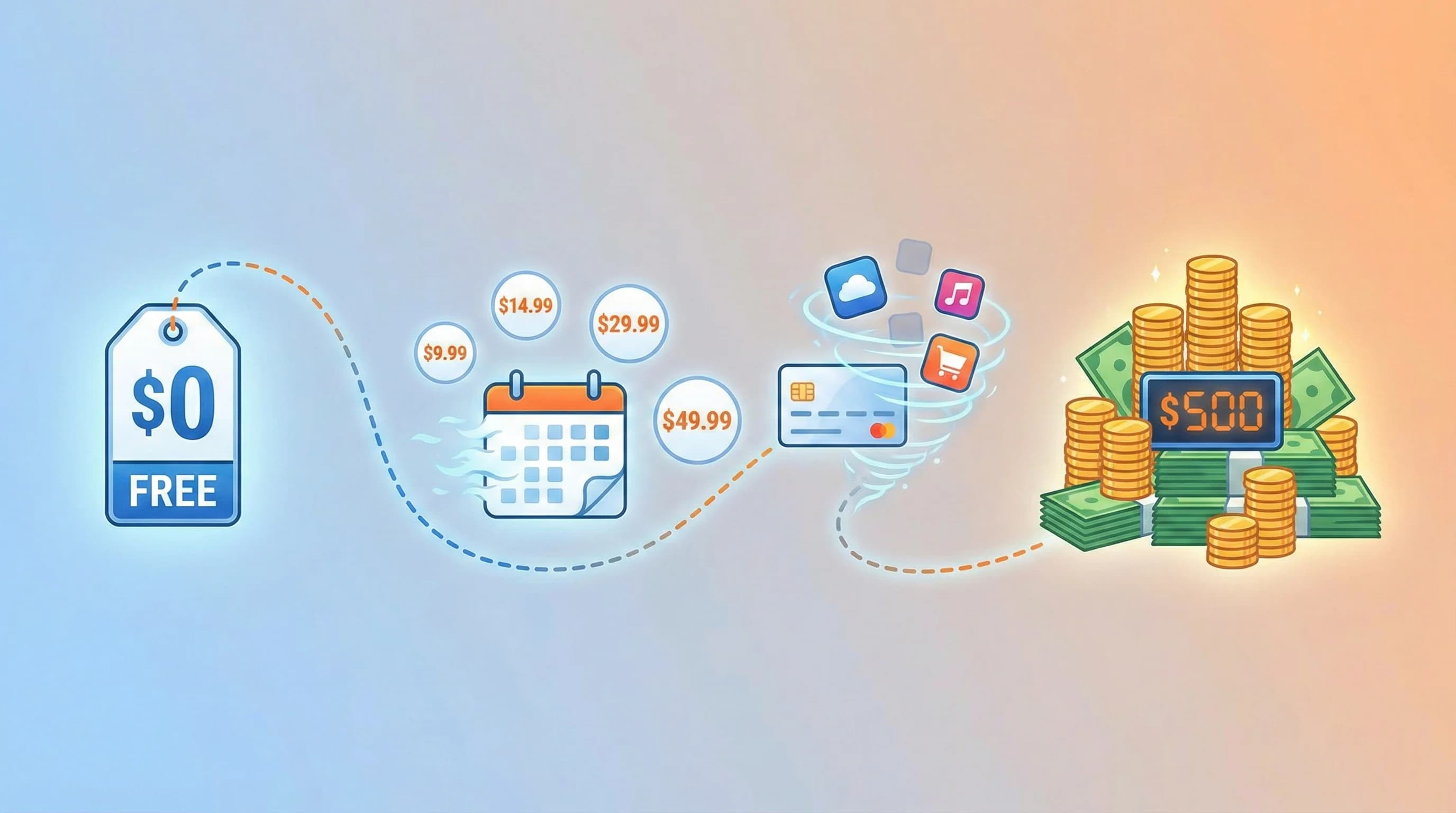
The Hidden Cost of Free Trials: How $0 Becomes $500/Year
That 'free' trial you forgot about? It's not free anymore. Discover how forgotten free trials are costing Americans an average of $500 per year and learn the exact steps to stop the bleeding.