The project ended. The subscription kept running.
Northwind Studio · team space
4 clients · 11 tools · $605.99 a month
Helios Coffee
Active$22.99/mo
LCanva Pro$12.99MCalendly$10.00Brightline Dental
Project ended$208.00/mo
MWebflow$29.00LMidjourney$30.00AVercel$20.00AAhrefs$129.00Kestrel Labs
Active$162.50/mo
LChatGPT Team$150.00MLoom$12.50Northwind (internal)
Active$212.50/mo
AFigma$45.00MNotion$80.00ASlack$87.50
Review queue
Empty until a client is archived
Example studio. Archive the finished client to see what happens to its tools.
Keep your agency’s SaaS costs under control
See which tools belong to each client, who owns them, and what renews next. Decide what to keep, cancel, or rebill in one shared team space.
14-day free trial · No card needed
One finished project, three clear decisions
A client’s site has launched. Marc marks Webflow for review, Laura marks the project’s Midjourney subscription for cancellation, and Ana flags Vercel for rebilling. Each person can act on their tools; the team can export the client’s costs for its next review.
- MMarcWebflowReview
- LLauraMidjourneyCancel
- AAnaVercelRebill
A shared view for the whole team
- Keep team subscriptions in a dedicated space, separate from personal lists.
- Give teammates member or admin access to manage the list together.
- See costs by client, owner, and category, and flag unused seats using the counts you record.
- Send renewal reminders to the teammate responsible for each tool.
Decide before the next renewal
See upcoming renewals and tools tied to finished projects. Record each decision where your team can find it.
Assign
Add your subscriptions and assign a responsible teammate to each one.
Group
Group tools by client or project. Archive a client to flag its remaining subscriptions.
Review
Review the next 30, 60, or 90 days of renewals, with undecided items first.
Decide
Record what to keep, cancel, downgrade, or rebill, then act with the provider.
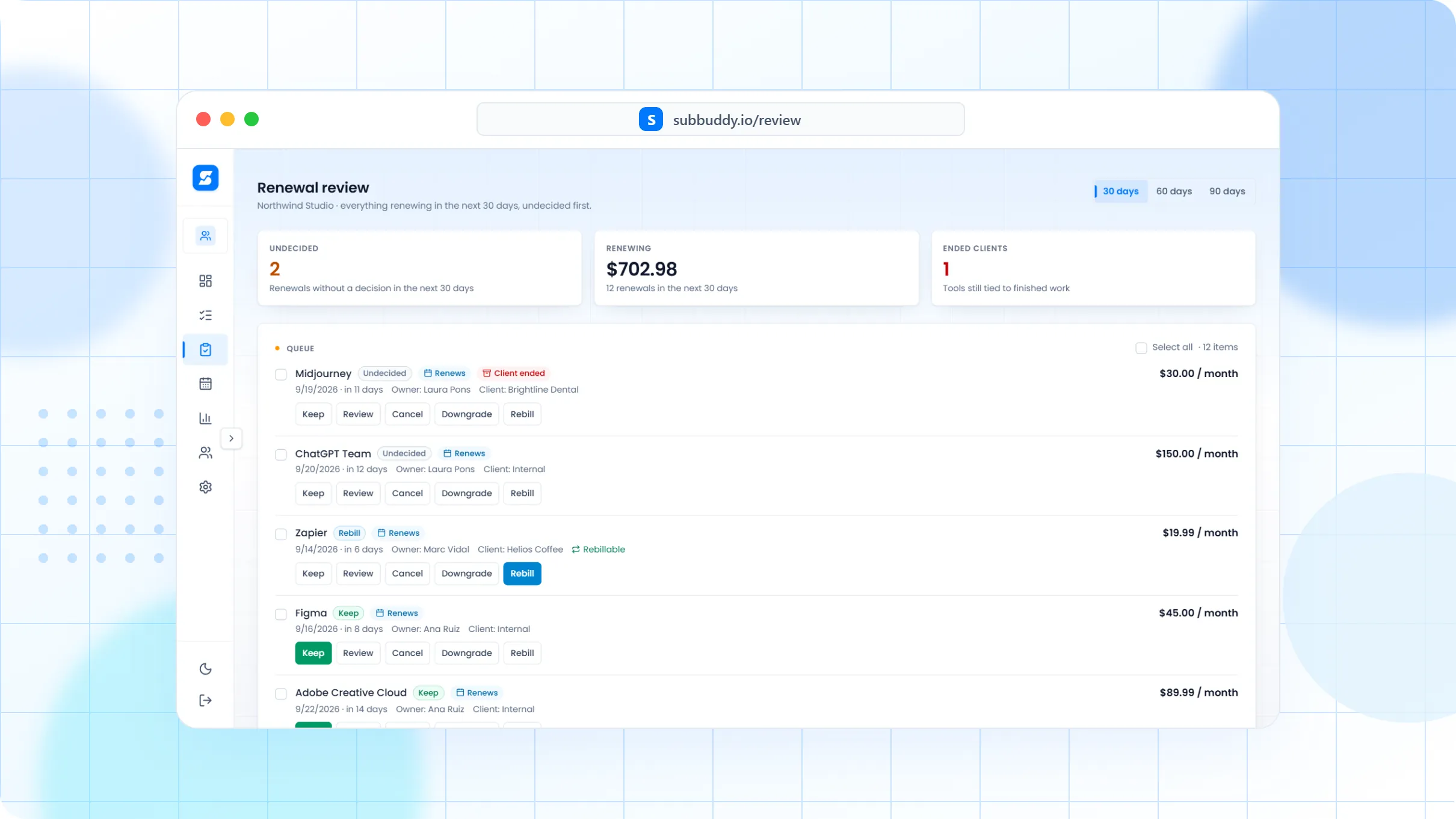
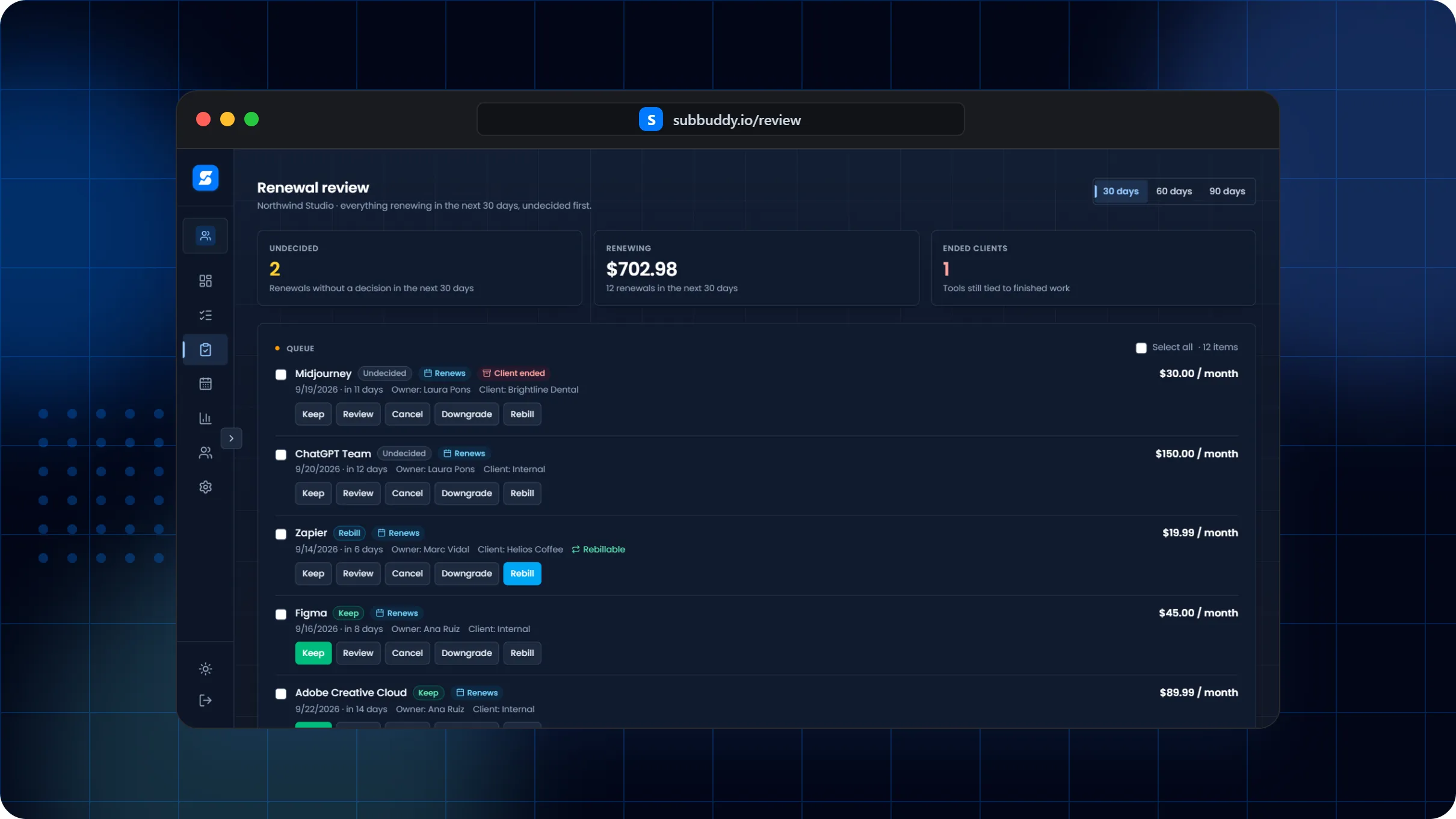
Screenshots on this page are from the live app.
Frequently asked questions
- How much does a team space cost?
- Team Starter is $29 a month or $290 a year for up to 3 members and 75 subscriptions. Team is $79 a month or $790 a year for up to 10 members and unlimited subscriptions. Members do not need a paid personal plan, and there is no per-seat pricing.
- Is there a free trial?
- Yes. Every team space starts on a 14-day Team Starter trial with no card. When it ends, the space becomes read-only until you pick a plan. Nothing is deleted.
- Can we export our subscription data?
- Yes. Export your team’s subscription list as CSV, including clients, owners, renewal dates, and decisions. Use it for quarterly reviews, client reporting, or your own spreadsheet.
- Do we need to connect a bank or company card?
- No. Add subscriptions manually or import a CSV into your team space. You choose which details to save.
- Who is a team space for?
- Small agencies and studios managing tools across client projects. Team Starter includes up to 3 members; Team includes up to 10. Both include client tracking, owners, and renewal reviews. SSO, SCIM, and procurement approval workflows are not included.
Give every client's tools an owner and a decision.
One shared space for the studio's subscriptions, kept apart from everyone's personal lists.
14-day free trial · No card needed
Team Starter
$29/month
or $290/yr
- Up to 3 members
- Up to 75 subscriptions
Team
$79/month
or $790/yr
- Up to 10 members
- Unlimited subscriptions