Asking for a Refund on a Subscription You Forgot to Cancel: What Actually Works

Table of Contents
Nothing entitles you to a refund on a subscription you forgot to cancel — the renewal ran exactly as you agreed it would — so every dollar you recover here is goodwill, and goodwill runs on published rules that change completely depending on the rail you bought through.
That is not a reason to skip the ask. Apple, Google, Amazon and Microsoft all publish something about post-charge refunds, and no two are the same shape. One is a hard 48-hour clock. One is a usage test with no clock. One is a 30-day right you can spend exactly once. One is a case-by-case review under a terms page that says all sales are final. Which one you are inside decides what you ask for, and whether a "yes" costs you the rest of the month you already paid for.
This post is about the case where you did not cancel. If you cancelled and were billed anyway you are not asking for a favor, you have grounds, and a different set of deadlines protects you: read the US dispute deadlines for recurring charges instead.
Last reviewed: September 12, 2026. Every window, limit and quoted sentence below was read on the vendor's own policy page on that date. None of these companies publish approval rates for discretionary refunds, and neither do we — where this post says an ask is more likely to land, that is reasoning about what each policy lets a front-line reviewer do, not measured data.
Goodwill or Grounds? Decide That First
Two questions sort you into the right process.
Did you cancel before the renewal date? If yes, the charge should not exist, and you are in dispute territory with real regulatory deadlines behind you. If no, the merchant did what your agreement said it would do.
Have you used the service since the charge? This is the single fact that carries weight in a goodwill request. Amazon's Prime terms make zero benefit use the literal test for a refund, and every other rail treats it as the fact that makes the ask reasonable. Unused is the currency. Everything else in your message is decoration.
People expect a federal cancellation rule to help here. It does not: no US rule requires a merchant to hand back money for a renewal you agreed to, and the FTC's click-to-cancel rule is not in force anyway, as the click-to-cancel rule's stalled 2026 timeline sets out. Cancellation law governs how easily you can leave. It says nothing about the charge that already cleared.
Rule out one narrow exception first, because it is a separate program rather than a goodwill route. Under the FTC's $2.5 billion Amazon settlement, redress capped at $51 a person goes to Prime customers enrolled through a "challenged enrollment flow" or blocked from cancelling between June 23, 2019 and June 23, 2025 who used "no more than three (3) Amazon Prime Benefits ... in any 12-month period following Amazon Prime enrollment". Automatic payments went out in November and December 2025, and the FTC's Amazon refunds page puts claims-process payments in late 2026. A renewal you forgot to cancel is not covered by any of it.
The Rail Decides the Rules, Not the Brand
The same app, the same price and the same forgotten renewal produce four different answers depending on who took your money. If you subscribed to a service inside an iPhone app, Apple is your counterparty, not the service. This is also why where you subscribe changes what you pay — and it changes your refund rights the same way.
| Rail | Published refund window | What the policy commits to | Reuse limit |
|---|---|---|---|
| Apple (App Store / iTunes) | None published | Nothing. "All Transactions are final." Case-by-case review, 24 to 48 hours for an update. | No published cap, but Apple may refuse requests where it finds abuse. |
| Google Play (Google's own window) | 48 hours from the charge | "You may be able to get a refund depending on the details of the purchase." Decision usually within one day, up to four. | "You can only return an app or game for a refund once." Worded around apps and games, not subscription renewals, so read it as a caution rather than a counter. |
| Google Play (after 48 hours) | None — routed to the developer | The developer's own policy. Play Console supports full and partial refunds on subscription orders. | Set by the developer, not by Google. |
| Amazon Prime | No clock — a usage test | Full refund of the current membership period if no benefits were used since the latest charge; processed in three to five business days. | A condition, not a counter: any eligible purchase or benefit use since the charge closes the published route. |
| Microsoft (bought direct) | 30 days after the recurring charge | "You're entitled to a refund of your most recent recurring billing charge if you cancel your subscription within 30 days after payment." | "Limited to one time per Microsoft account, per subscription product." |
| Direct streaming (Netflix-style) | None | Access runs to the end of the paid period. No refund route published. | Pure agent discretion; nothing published to appeal to. |
What Each Rail Actually Publishes
Apple: a discretionary review under a final-sale clause
Apple's refund route is reportaproblem.apple.com: sign in, choose "I'd like to", select "Request a refund", pick a reason, choose the subscription, submit. Apple's own instruction is to "wait 24 to 48 hours for an update on your request". Two operational details matter more than the reason you pick. First, a charge that is still pending cannot be reported at all: "If the charge is pending, you can't request a refund yet. After you receive an email receipt, try to request a refund again." Second, if the purchase never appears, it was probably billed to a different Apple Account, and Apple's fix is to sign in with the Apple Account the receipt belongs to.
Set expectations from the contract, not from forum anecdotes. The Apple Media Services Terms and Conditions (last updated September 15, 2025) say plainly: "All Transactions are final." Apple runs the refund flow anyway and approves requests through it, but the terms mean it never owes you one, and they let Apple "refuse a refund request if we find evidence of fraud, abuse, or unlawful or other manipulative behavior". That clause is the reason to make one clean request rather than five.
Google Play: a 48-hour clock, then a different desk
Google's refund policy for apps, games and in-app purchases including subscriptions is short and specific. "Within 48 hours: You may be able to get a refund depending on the details of the purchase." "After 48 hours: Contact the developer to troubleshoot and find out if you can get a refund." And the limit that catches people: "You can only return an app or game for a refund once."
Two more lines from Google's request-a-refund page tell you how to behave once the form is in: "You'll usually get a decision within one day but it can take up to four days", and, bluntly, "Multiple requests for the same transaction won't expedite the refund process." Wait the four days before doing anything else.
Missing the 48 hours moves the decision to the developer, who has more refund tools than Google's consumer form does. Our Google Play subscriptions audit has the menu paths for finding the order and switching renewal off, which you should do before writing to anyone.
Amazon: the cleanest published rule of the four
Amazon does not run a clock. Its Prime cancellation help page states: "Paid members who haven't used their benefits are eligible for a full refund of the current membership period. Amazon will process the refund in three to five business days." The Prime Terms and Conditions, last updated August 14, 2026, add the trial-conversion case: cancel within three business days of signing up or converting from a free trial and Amazon refunds the full fee, "provided that we may charge you (or withhold from your refund) the value of Prime benefits used by you and your account during this 3-business day period." Outside that window, the terms are blunt: Amazon refunds the full fee "only if you and your account did not make any eligible purchases or take advantage of Prime benefits since your latest Prime membership charge."
Amazon's membership fee page lists US Prime at $14.99 a month or $139 a year as of this review, so a forgotten annual renewal is a $139 question. If you have not used the membership, do not order anything with free shipping or open Prime Video before you cancel. One two-day delivery turns a published full refund into a discretionary conversation.
Note that the test is benefits used since the latest charge, not since you joined: a year of heavy use followed by a quiet renewal week still fits it.
Microsoft: an actual published right, spendable once
Microsoft is the outlier. Its subscription refund policy says: "In addition, you're entitled to a refund of your most recent recurring billing charge if you cancel your subscription within 30 days after payment." The catch is in the next line: "This refund right is limited to one time per Microsoft account, per subscription product."
The same page lists the countries where cancelling gets you a prorated refund at any time: Canada, Denmark, France, Israel, Korea, Türkiye and a set of Danish and French overseas territories. The United States is not on it. For Microsoft 365 Basic, Personal, Family, OneDrive and Clipchamp, the page's entry for every other country reads "Prorated refunds are not available"; for Copilot Pro and Microsoft 365 Premium, a US subscriber gets a proration only by cancelling "within 14 days of initial purchase". So the American play is the 30-day, once-per-product right, and it is worth saving for an annual renewal rather than burning on a single month.
Direct streaming: nothing to appeal to
Most consumer streaming services publish no refund mechanism at all. Netflix's cancellation help page gives the model exactly: "If you cancel with time left in your billing period, you can use Netflix until the account cancels automatically at the end of the billing period." Access is what you keep; the page says nothing about money back. With no clause to cite, the message is an appeal to a person, so name the outcome you want rather than waiting to be offered one.
The Paragraph That Works Better Than a Complaint
Long messages lose. Whoever reads it is choosing between a short list of outcomes, and anything that is not a fact they can act on is weight without leverage. Five elements, one paragraph:
- The charge, identified. Date, amount, last four digits of the card, and the platform order or transaction ID.
- The one fact that matters. That you have not used the service since that charge — stated flatly, with the last date you did use it if you know it.
- The ask. A refund of that specific charge, with auto-renewal switched off.
- The fallback, in the same message. If a full refund is not possible, a partial refund or account credit for the unused portion.
- A close with no threat in it. Thank them and stop.
A version you can adapt:
Hi — my annual plan renewed on September 3 for $119.88 (card ending 4412, order 8842-XXXX). I meant to cancel before the renewal and missed it. I have not used the account since the charge; my last sign-in was in June. Could you refund that charge and set the subscription not to renew? If a full refund is not possible, I would be glad to take a partial refund or account credit for the unused portion instead. Thanks for taking a look.
What to leave out, deliberately: the story of why you forgot, complaints about how hard cancelling was, and above all any mention of a chargeback. Naming one turns a customer-service decision into a risk decision, and plenty of vendors' terms allow them to suspend an account over a disputed charge. A chargeback is a real option, but it belongs to the has-grounds path, not this one.
If you are also writing the cancellation itself, SubBuddy's cancellation email generator handles that half; the refund paragraph above is what you add underneath it.
How Many Attempts You Actually Get
Every rail hardens, for different reasons, and the limits are published often enough to plan around.
| Rail | What ends the conversation | How to spend the attempt |
|---|---|---|
| Apple | No hard cap, but the terms permit refusal where Apple finds abuse, and resubmitting the same request is the pattern that looks like it. | One clean submission per charge. If declined, one follow-up through Apple Support with a new fact, then stop. |
| Google Play | The 48-hour window closes Google's own route, and "multiple requests for the same transaction won't expedite the refund process." | Use Google's form only inside 48 hours, then wait the four days. After that, go straight to the developer; a second Google request just burns time. |
| Amazon Prime | Using a benefit. Not a counter — a switch, flipped by one delivery or one video. | Cancel first, before you touch anything Prime-related, then check the refund line on the confirmation. |
| Microsoft | The published right is "one time per Microsoft account, per subscription product", within 30 days of the payment. | Save it for an annual renewal. Using it on a one-month charge spends a year-sized right on a month-sized problem. |
| Direct vendor | Nothing published. In practice the first "no" is usually the policy speaking and the second is the same policy. | Ask once, include the fallback, and accept whichever of the two you are offered. |
One rule covers all five: never reopen a closed request with the same facts. Reopen only when you can add a new one, such as a duplicate charge or a renewal notice that never reached the address on file.
Ask for Less Than a Full Refund — and Why It Can Get You More
The mechanic that decides this is documented in Google's own developer instructions. From the Play Console page on issuing refunds: "If you refund the most recent order in a subscription, the order is refunded, the user's subscription is removed immediately, and future recurrences are automatically canceled." And, separately: "If you refund an older order in a subscription, the order is refunded and the subscription remains active."
A full refund of the month or year you just paid for does not mean a refund plus the remaining time. On this rail the subscription disappears the moment the refund lands, so if you were half-hoping to use the period you paid for, a full refund is the wrong thing to ask for.
The alternative sits in the same tool. Play Console lets a developer "issue full or partial refunds for subscriptions your users have purchased", noting that "you can't issue partial refunds for paid apps" and that "partial refunds are only supported for orders placed after March 2018." Google's page frames the full refund of a current order as "refund and revoke"; a partial refund carries no revoke, so it returns some money without ending the period you bought. That is the shape of ask worth naming in your first message:
- Full refund, access ends now. Right when you will not use the service again.
- Partial refund, access to period end. Right when the renewal was a mistake but the time still has value. Note that a strict proration of the unused portion is a different flavor and it ends access, so say which one you mean.
- Account credit, renewal off. The weakest financially. It costs a vendor deferred revenue rather than cash, which is our reasoning for why it should clear most easily, not a measured result. Credit only spends with that vendor.
Nobody can honestly publish how often each is approved, so treat any page quoting an approval percentage as invented. What is checkable is which asks the tooling supports, and that list is narrower than most refund guides imply. Google is the only rail here that documents partial refunds at all, and it carries a detail US readers usually miss: Google's partial refunds page states that "partial refunds for subscriptions are not supported for users outside of Israel, France, Germany, and New York." New York subscribers therefore have a documented partial-refund route on Play rather than a favor to request, which is worth saying in the message. Apple's form deals in whole transactions. Amazon and Microsoft publish full-refund routes and nothing smaller. On a vendor's own billing system a partial refund or credit is almost always technically possible but never committed to, which is why you name it yourself instead of waiting to be offered it.
What the Ask Is Worth: Running the Numbers Before You Write
Spend two minutes deciding whether the request is worth the twenty it will take. An illustrative case, not measured data: an annual plan bought direct, renewed at $120, noticed on day nine, 356 days of unused access left.
| Outcome | Cash back | Access you keep | When it is the right ask |
|---|---|---|---|
| Full refund | $120 | None — access typically ends with the refund | You are certain you are done with the service. |
| Partial refund of the unused portion | Around $117 at strict proration | None — a proration assumes you stop there | When the vendor will hand back the unused part but not the whole charge. |
| Account credit, renewal off | $0 cash, credit only | 356 days | You will plausibly use the vendor again. |
| Declined, renewal off | $0 | 356 days | Still a win: it caps the loss at one year instead of two. |
Two things fall out of that table. The annual plan is where the ask is worth making: a forgotten $9.99 month costs ten dollars and twenty minutes of your time, a forgotten $120 year is worth an email. And the bottom row is not a failure. Turning renewal off is the part you control outright, and it is worth more than the refund you were chasing, because it applies to every future year rather than this one.
Whatever the answer, cancel properly rather than assuming the refund did it for you. Our platform-by-platform cancellation guide has the exact paths, and the confirmation email is the artifact worth keeping. Then record the date, price and billing rail, and set the warning far enough ahead to act on: how many days before a renewal you actually need works out the lead time per service type.
Sources and Scope
This post covers US consumers asking for discretionary refunds on renewals they did not cancel. It does not cover cancelled-but-charged disputes, unauthorized charges, or non-US statutory withdrawal rights.
- Apple: request a refund for apps or content — the reportaproblem.apple.com flow, the pending-charge rule, and the 24-to-48-hour update time.
- Apple Media Services Terms and Conditions — "All Transactions are final" and Apple's right to refuse a request where it finds abuse.
- Google Play refund policies for apps, games and subscriptions — the 48-hour window, the routing to developers, and the once-per-app limit.
- Google: request a refund on Google Play — the one-to-four-day decision time and the note on repeat requests.
- Google: partial refunds for subscriptions on Google Play — the jurisdictions where consumer partial refunds are supported, New York included.
- Play Console: manage orders and issue refunds — refund-and-revoke versus refund-only, and the developer-side rules on partial refunds.
- Amazon Prime Terms and Conditions (last updated August 14, 2026) — the three-business-day conversion rule and the no-benefits-used condition.
- Amazon: how to cancel Amazon Prime — the full-refund line and three-to-five-business-day processing.
- Amazon: the Prime membership fee — the $14.99 monthly and $139 annual US prices.
- Microsoft subscription refund policy — the 30-day right, the once-per-account-per-product limit, and the prorated-refund country list.
- FTC: Amazon refunds — the $2.5 billion settlement, the $51 per-person cap, the November–December 2025 automatic payments, and the three eligibility requirements.
- Netflix: how to cancel Netflix — the access-until-period-end cancellation model; the page publishes no refund route.
Alex Coca
Alex Coca is the independent developer behind SubBuddy. He researches subscription billing, cancellation patterns, and recurring-spend workflows by building the product and reviewing real subscription audits from users and his own accounts.
Make the Next Renewal a Decision, Not an Argument
This whole post exists because a date passed unnoticed. Log the subscription you just fought over in SubBuddy — price, billing rail, renewal date — and get the reminder before the charge instead of writing the email after it.
Track My Renewal DatesRelated Articles
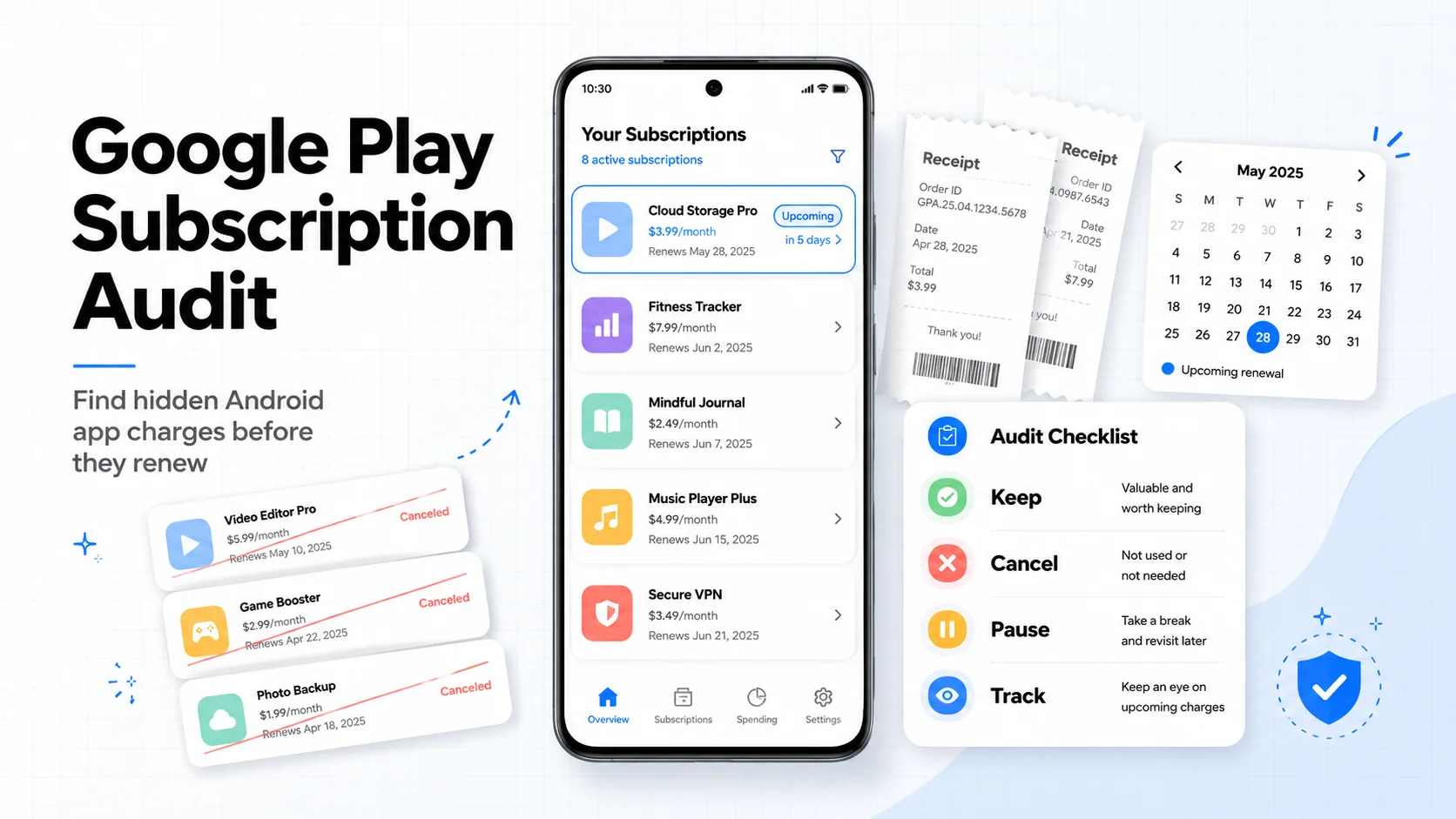
Google Play Subscription Audit: How to Find and Cancel Hidden Android App Charges in 10 Minutes
Android app subscriptions are easy to start and easy to forget. This Google Play audit shows where to check, how to cancel or pause, what refunds can and cannot do, and how to track the apps you keep.
The Complete Guide to Canceling Subscriptions on Every Platform (2026)
Canceling subscriptions should be simple, but companies make it intentionally difficult. Here's your step-by-step guide to canceling subscriptions on every major platform, from Apple to Amazon.
The Hidden Cost of Free Trials: How $0 Becomes $500/Year
That 'free' trial you forgot about? It's not free anymore. Discover how forgotten free trials are costing Americans an average of $500 per year and learn the exact steps to stop the bleeding.