Your Delivery App Says You Saved $340. Here's What That Number Actually Counts.
Table of Contents
Every delivery membership counter adds up the fees it waived and stops there — it never subtracts the membership fee, the gap between app menu prices and in-store prices, the busy-time and priority surcharges, the tip, or the tax. That makes it a marketing number wearing the clothes of an accounting number. This post takes the two US counters that publish a running total apart line by line, prices the third membership that publishes none, and gives you the break-even calculation no app will show you: how many orders a month your membership actually needs.
Last reviewed: September 14, 2026. Prices, fee structures and menu paths were checked against each company's own pages on this date. Fee amounts vary by city, merchant and order, so every dollar figure below is labeled as either a sourced price or an illustrative example.
Where Each Counter Actually Lives
Two of the three big US delivery memberships publish a running savings total, and both sit one level deeper in the app than the cancel button.
- Uber One. Uber's help center gives the path exactly: open the Uber app, tap Account at the bottom right, scroll down, select Uber One, and your total savings appear on that screen. Tapping the "Money saved" tile opens a breakdown.
- DashPass. The estimated total saved since you joined sits on the Manage DashPass screen inside your DoorDash account; Ridesharing Driver's DashPass fee comparison, updated June 26, 2026, describes the same screen. The membership runs $9.99 a month or $96 a year, with a $4.99 student tier — figures we track on our DashPass price and cancellation page.
- Instacart+. No running savings total we could find published anywhere: Instacart documents the plan and its fees, not a member's cumulative saving. The plan is $9.99 a month or $99 a year, with $0 delivery on grocery orders of $10 or more, $35 at Costco and $25 at eligible restaurants — and the same page repeats that service fees still apply. With no counter, the receipt audit further down is the only way to price it.
Neither counter is wrong. Both answer a narrower question than the one you are asking.
What the Counter Counts
Reverse-engineered from each company's published benefit terms, the counters add up three things:
- The delivery fee it waived. Only above a minimum subtotal, and the minimum is set per merchant: Instacart+ publishes $10 at grocery, $35 at Costco and $25 at eligible restaurants; Uber's fine print adds that other fees and taxes do not count toward whatever minimum the store sets.
- The service-fee reduction. A discount, not a removal. The June 2026 fee comparison linked above puts DoorDash service fees at roughly 5% with DashPass against 10–15% without, and repeats DoorDash's own claim that members save $4–5 per order.
- Member-only percentage discounts where the app applies them automatically.
Notice what those three have in common: they are all comparisons against a non-member ordering the same basket on the same app. That is a real comparison. It is not the comparison most people think they are reading.
What the Counter Never Subtracts
Four of the six line items on a delivery receipt sit outside the calculation. Two of those four are routinely bigger than everything the counter adds.
| Line item | In the savings counter? | What it does to your real total |
|---|---|---|
| Waived delivery fee | Counted | Genuine saving, capped by the order minimum you had to hit. |
| Reduced service fee | Counted | Scales with subtotal, so big baskets benefit most. |
| The membership fee itself | Never | $119.88 a year at $9.99 a month; $96 for DashPass or $99 for Instacart+ on an annual plan. Subtract it by hand. |
| App menu price vs. in-store price | Never | Invisible on the receipt. Can quietly exceed every fee saved. |
| Priority, busy-time and long-range delivery fees | Never | Uber states plainly that these are extra and optional, on top of membership benefits. |
| Tip, tax and small-order shortfall | Never | Yours in full — and the minimum-order rule can push the basket up to unlock a "free" delivery. |
The first exclusion is not a matter of opinion. In April 2025 the FTC sued Uber over Uber One's billing and cancellation practices, alleging that customers "are wrongly promised savings of $25 a month" and that "even if that were true, Uber does not account for the cost of the subscription (up to $9.99/month) when calculating those savings." In December 2025, 21 states and the District of Columbia joined an amended complaint that added a request for civil penalties. Uber has not been found liable; the case is pending in the Northern District of California. But the arithmetic point stands regardless of the verdict: a savings figure that ignores the price of the thing generating the savings is incomplete by construction.
The second exclusion — the menu-price gap — is now a live regulatory question. On April 16, 2026 the FTC opened an advance notice of proposed rulemaking on fees in online food and grocery delivery, putting more than sixty questions out for comment. One of the practices on the list: higher prices for the same food or products bought for delivery than in the store or restaurant. Four months earlier the same agency had announced that Instacart would pay $60 million in consumer refunds to settle allegations that included advertising free delivery on a first order while a mandatory service fee still applied. When a regulator has to ask whether menu prices match, assume yours might not, and spend five minutes checking.
The Break-Even Formula the App Cannot Show You
The calculation is one line:
Orders needed per month = monthly fee ÷ (waived delivery fee + service-fee percentage gap × basket subtotal)
The table below runs that formula against three realistic basket sizes. It uses a $2.99 waived delivery fee and a five-percentage-point service-fee gap — an illustrative midpoint drawn from the 5% vs. 10–15% range reported above, not a price either company quotes. Substitute your own receipt figures and the answer changes; that is the point of writing it as a formula.
| Basket subtotal | Delivery fee waived | Service-fee gap (5 pts) | Fee saving per order | Orders/mo to clear $9.99 | Orders/mo to clear a $96 annual plan ($8.00/mo) |
|---|---|---|---|---|---|
| $15 (solo lunch) | $2.99 | $0.75 | $3.74 | 2.7 → 3 orders | 2.1 → 3 orders |
| $30 (dinner for two) | $2.99 | $1.50 | $4.49 | 2.2 → 3 orders | 1.8 → 2 orders |
| $60 (family or grocery) | $2.99 | $3.00 | $5.99 | 1.7 → 2 orders | 1.3 → 2 orders |
Three things fall out of the table. Big baskets break even fastest, because the only component that scales is the service-fee reduction. The annual plan lowers the bar by roughly one order every other month, which matters only if you were going to keep it twelve months anyway. And almost nobody needs more than three orders a month, which is why the sign-up pitch works — and why the interesting question is not break-even at all, but everything the formula excludes.
If you hold several memberships that overlap on fees and perks, the wider version of this math is in our bundle ROI calculator, which handles the case where two subscriptions are paying for the same benefit.
A $340 Counter, Audited End to End
Here is the audit on an illustrative household — not measured data, but arithmetic you can repeat on your own screen in ten minutes.
Suppose your app shows $340 saved over twelve months of monthly billing. At the $4.50-per-order average implied by the fee table, that is about 76 orders in the year, or six a month. Now run the two subtractions the counter skips.
- The membership. $9.99 × 12 = $119.88. Counted saving falls to $220.
- The menu gap. Suppose your regular restaurants price items 10% higher in the app than on their own menu — a hypothesis, and one you can test in five minutes with a single item. On a $30 subtotal that is $3.00 an order, or $228 across 76 orders. The $220 is gone.
That does not mean the membership was a mistake. It means the counter answered "did I pay less than a non-member on this app?" — yes, by $220 — while the question you meant to ask was "did this app cost me less than the alternatives?" Those are different questions, and only one of them is on your screen. For scale on the alternative: a LendingTree analysis reported in November 2025 found that ordering delivery cost 79.5% more than picking the same meal up in person — an average of $9.30 extra per order across five chains in the ten largest US cities.
The honest conclusion for most households: the membership is usually the right call given that you are ordering delivery anyway, and it is never the thing that makes delivery cheap.
Before You Renew: Check You Aren't Paying Twice
Delivery memberships arrive bundled with credit cards, retail memberships and phone plans often enough that paying for one twice is easy. Three checks, in order of how often they pay off:
- Your credit card. Chase's complimentary DashPass terms give eligible cardholders 12 months of DashPass when activated between February 1, 2025 and December 31, 2027 — and state that afterwards cardholders "will continue to be enrolled and will be automatically charged the then-current monthly DashPass rate." That is a free year that converts into a paid subscription on a date nobody writes down. Write it down.
- Your other memberships. Prime, carrier perks and bank rewards programs all bundle delivery benefits in some markets. If two of your subscriptions waive the same delivery fee, one of them is decoration.
- Your own account list. A membership bought inside the app and a second one bought through a partner do not always collapse into one charge. Our guide to deciding which duplicate charge to cancel covers which one to keep when both are live.
The same fine print sits under the perk as under the paid plan: Chase's terms note that "other fees (including service fee), taxes, and gratuity on orders may apply". A complimentary membership waives the delivery fee, not the receipt.
The 90-Day Re-Check, and the One Charge You Have to Log by Hand
A single counter reading is not evidence. Two readings 90 days apart are. The workflow:
- Today. Record the savings-counter total, the date, and the membership's renewal date. Note which plan you are on.
- Every order in between. Nothing to do. Just do not change your habits for the experiment — a measured quarter of normal ordering is the whole point.
- Day 90. Read the counter again. Subtract the first reading. That difference, minus one quarter of the membership fee, is your real quarterly benefit as the app measures it — before the menu gap.
- Decide. Above zero and you order year-round: keep it. Above zero but your ordering is seasonal: cancel and rejoin when the season returns. Below zero: cancel, and set the reminder before the renewal, not after.
Ninety days is not an arbitrary interval. It is the threshold in SubBuddy's own review engine: a subscription that has gone 90 days without a recorded review decision is surfaced as stale in the Needs Attention list, we picked that interval because a quarter of ordering shows a pattern, where a single month shows the weather.
One thing no delivery app will do for you: subtract its own fee. That is why the renewal date has to live somewhere outside the app. SubBuddy is a manual tracker with no bank linking, so you type the membership in once with its renewal date, set a per-subscription reminder lead time, and drop the counter reading in the notes field. If you would rather keep it in a sheet, the column layout is in our 21-column subscription spreadsheet schema, and the question of how many days of warning a given renewal needs is answered in the reminder lead-time table.
If you want the head-to-head on which of the two US memberships fits your ordering pattern rather than how to audit either, that comparison lives on our Uber One vs. DashPass page. And when the price of one of them moves, our 2026 price-hike tracker records the change and its effective date.
Sources and Scope
- Uber One (US) — $9.99/month, the $0 delivery fee conditions, and the fine print that "other fees & taxes apply" and that Priority and Long Range Delivery cost extra. Checked September 14, 2026.
- Uber Help: where to find your Uber One savings — the exact in-app path and the "Money saved" tile.
- FTC v. Uber, April 21, 2025 — the allegation that advertised savings did not account for the subscription's own cost. Pending; no finding of liability.
- FTC delivery-fee ANPRM, April 16, 2026 — the fee practices the regulator put up for public comment, including price differences between delivery and in-store.
- FTC settlement with Instacart, December 2025 — $60 million in consumer refunds over allegations that included free-delivery advertising alongside a mandatory service fee.
- Instacart+ — $9.99/month or $99/year, order minimums, and the "service fees apply" caveat beside the $0 delivery fee claim.
- Ridesharing Driver, DashPass price comparison (updated June 26, 2026) — the 5% vs. 10–15% service-fee spread, DoorDash's $4–5 average-saving claim, and the Manage DashPass savings screen.
- Chase complimentary DashPass terms — the 12-month benefit, the auto-conversion to a paid monthly rate, and the fees the benefit does not cover.
Alex Coca
Alex Coca is the independent developer behind SubBuddy. He researches subscription billing, cancellation patterns, and recurring-spend workflows by building the product and reviewing real subscription audits from users and his own accounts.
Log the Counter, Not Just the Charge
Add your delivery membership to SubBuddy with the renewal date and today's savings-counter reading in the notes. In 90 days you will have two data points and a real answer instead of a feeling.
Track My MembershipRelated Articles
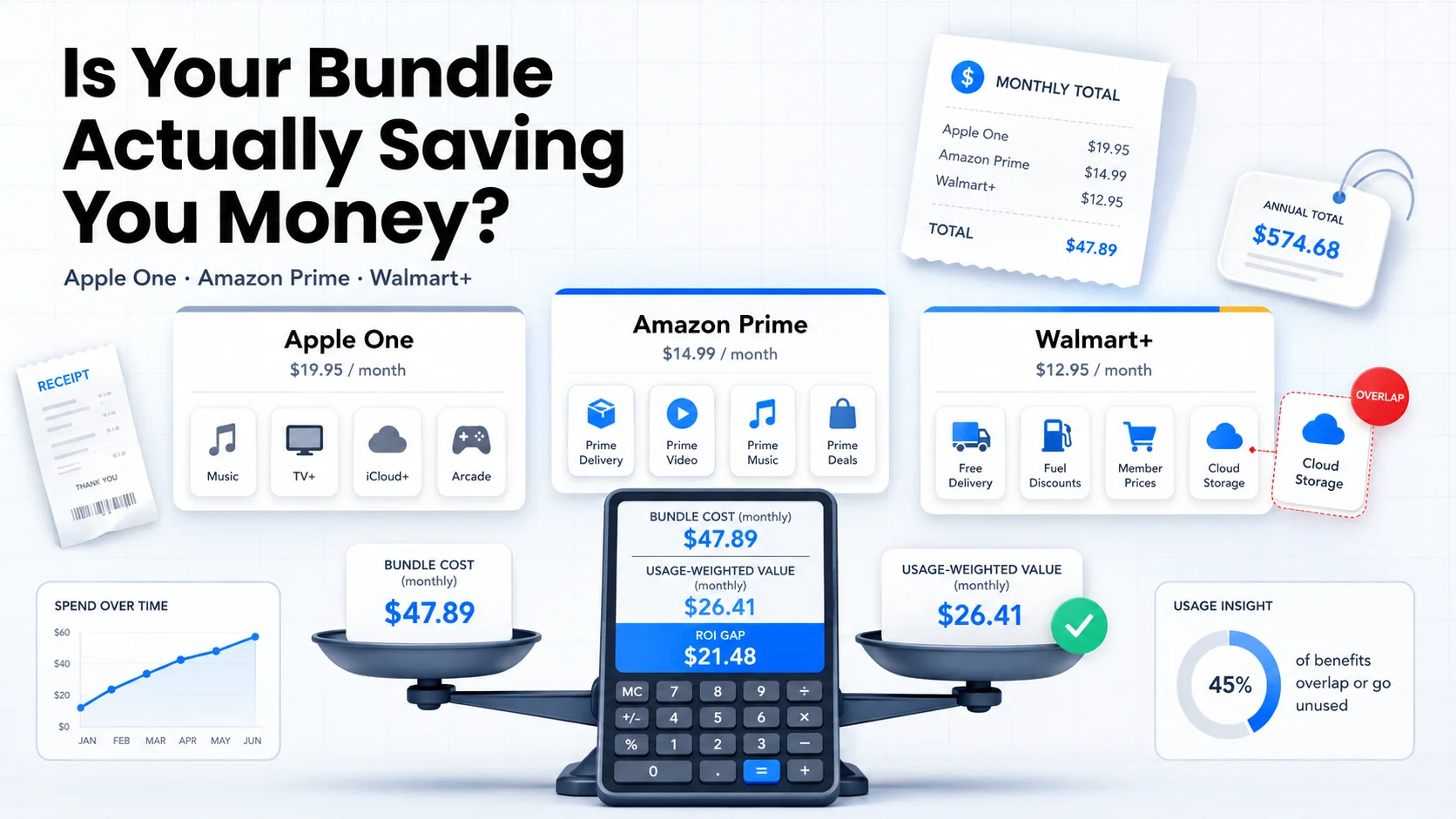
Is Your Bundle Actually Saving You Money? The 2026 ROI Calculator for Apple One, Amazon Prime, and Walmart+
Most people buy subscription bundles assuming they save money but never run the math. This step-by-step framework breaks down Apple One, Amazon Prime, and Walmart+ by what you actually use in May 2026 and gives you a clear decision rule for whether your bundle is a deal, a breakeven, or a quiet money drain.
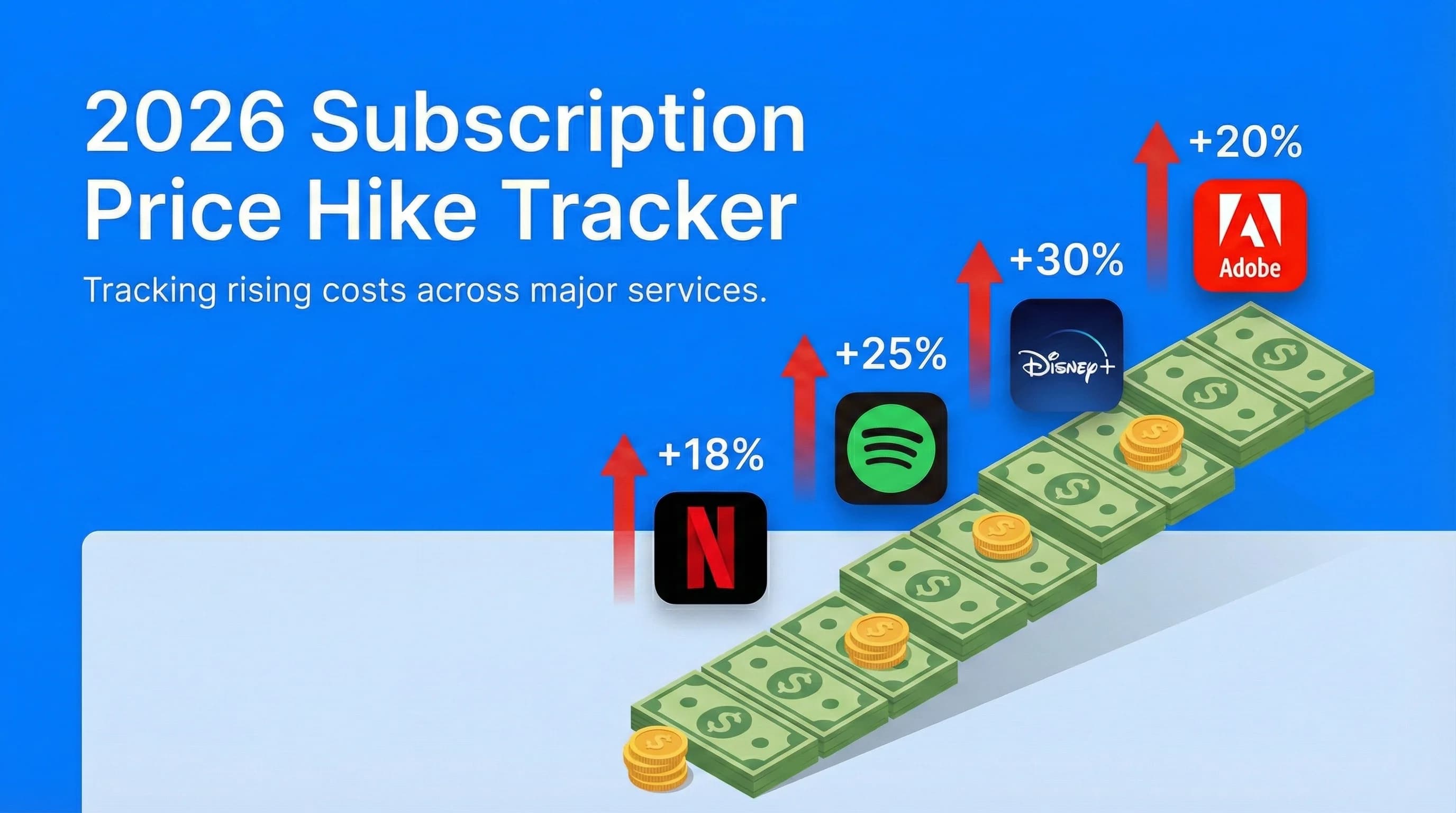
2026 Subscription Price Hike Tracker: Every Service That Raised Prices This Year
Netflix, Spotify, Disney+, Adobe, and other recurring services have all become more expensive heading into 2026. This tracker summarizes confirmed major subscription price increases, when they happened, and how much more you're paying.
How Much Does the Average American Spend on Subscriptions? What the Best Data Shows
There is no single perfect subscription average. Current public studies measure different baskets, from $219/month across subscription services to $69/month for four paid streaming services.