The Student Discount Cliff: Every Plan's Re-Verification Date, Year Cap, and What It Costs the Month It Lapses
Table of Contents
Every major student plan is a fixed-term price with a silent auto-convert: Spotify, YouTube Premium, Apple Music and Amazon's young-adult Prime all re-verify once a year and all stop discounting after roughly four years, and when either clock runs out the subscription keeps billing at full price.
The date worth tracking is not your renewal date. It is your verification expiry date, a different date that never appears on a bank statement, rarely appears in an account screen, and produces a permanent price increase without anybody sending you a price-increase email.
This is the calendar. Every re-verification cadence, every year cap, the exact plan each student tier converts into, and the monthly step at conversion.
Last reviewed: September 3, 2026. Every price and every cap below was read off the vendor's own US page or help article in the last week of August 2026, and each one is linked next to the claim it supports. Vendors reprice without warning; check the linked page before you budget against these figures.
Three Dates, One Statement
Every student plan you hold runs on three separate dates, and only one of them is visible in the places you normally look:
- The billing date. On your statement, in your bank app, in your tracker. This one is easy.
- The verification expiry date. Twelve months from the day you last verified, not from the start of term and not from your billing date.
- The cap date. The hard wall. Four years for Spotify and YouTube, 48 months for Apple Music, four years or the end of your studies for Amazon's student route. Re-verifying does not move it.
Dates two and three are the expensive ones, and they share a property that makes them almost invisible: when they pass, no merchant raises a price. A discount simply stops applying. That is why none of this shows up in a price-hike tracker, why no advance-notice rule designed around announced increases is triggered, and why the charge that lands looks like an ordinary renewal from a familiar merchant, under the same billing descriptor it has always used. The only thing that changed is the number.
The Re-Verification Calendar
Four services, US list prices as of 28 August 2026. The last column is the number that matters: what your monthly bill does the moment the discount stops applying.
| Plan | Student price | Re-verify | Lifetime cap | Converts to | Monthly step |
|---|---|---|---|---|---|
| Spotify Premium Student | $6.99 | Every 12 months, via SheerID | 4 years (the first year plus three renewals) | Premium Individual, $12.99 | +$6.00 |
| YouTube Premium Student | $8.99 | Annually, via SheerID | 4 years | Premium Individual, $15.99 | +$7.00 |
| Apple Music Student | $6.99 | Once a year, prompted by email | 48 months of student subscription | Apple Music Individual, $11.99 | +$5.00 |
| Prime for Young Adults (student route) | $7.49/mo or $69/yr | At renewal, when Amazon emails you | 4 years or the end of your studies, whichever is first | Amazon Prime, $14.99/mo or $139/yr | +$7.50/mo (+$70/yr) |
| Full stack | $30.46 | Four separate anniversaries | — | $55.96 | +$25.50 |
Two things in that table deserve a second look.
First, the caps are not marketing rounding. Spotify's student page spells the arithmetic out: students "can re-verify their eligibility once every 12 months, for a maximum of 3 additional 12 month periods" — four years including the first. YouTube's help page is blunter: "You can be on a YouTube student membership for up to 4 years." Apple counts in months rather than years: 48. Take a five-year degree, a placement year, or a master's straight after an undergraduate degree, and you will run out of student pricing before you run out of studying. No appeal fixes that, because you are still eligible — you have simply used the allowance up.
Second, the YouTube step is larger than it was a year ago, because the full-price side moved. YouTube Premium raised US prices in April 2026 for the first time since 2023: Individual went from $13.99 to $15.99 and Student from $7.99 to $8.99, live immediately for new subscribers and applied to existing ones from their June 2026 billing cycle. Student prices rising by a dollar while the standard plan rises by two means the cliff gets steeper every time a service reprices, even when the student tier goes up too.
The Cliff Month: What the Stack Costs When It Lapses
$25.50 a month is $306 a year, and an 84% increase on that line of your budget. That is not a rounding error you absorb; it is roughly a phone bill appearing out of nowhere.
But it almost never arrives as one $25.50 jump, and that is the actual trap. The four verification anniversaries are set by four different sign-up dates, so the increase arrives as a staircase. The sequence below is an illustration using the list prices above, not measured data:
| Step | What happened | Size of the step | Monthly total after |
|---|---|---|---|
| Start | All four verified | — | $30.46 |
| 1 | Apple Music re-verification email skipped | +$5.00 | $35.46 |
| 2 | Spotify's 12-month window closes | +$6.00 | $41.46 |
| 3 | YouTube annual verification lapses | +$7.00 | $48.46 |
| 4 | Prime renews at the regular rate | +$7.50 | $55.96 |
No single step is large enough to make anyone open a bank statement. $5 is a coffee. The sum is $306 a year, permanently.
Your cliff month is the month the last of the four converts. Work it out like this: for each plan, take the earlier of (a) the next verification anniversary you are likely to miss and (b) your first verification date plus the cap. The latest of those four dates is your cliff month, and the total step is the sum of the deltas that have not already landed.
For most people the caps cluster, because most people set up their student stack in the same fortnight, freshers' week of year one. Sign up for all four in September of your first year and all four caps land in the same academic year, four years later. That is why final-year students so often get the entire staircase in a single semester, at exactly the point they have the least slack.
One footnote on Spotify in the US: the student tier currently comes with "access to Hulu's (With Ads) plan at no extra cost". That is not in the $6.00 delta, because it is a benefit rather than a charge — but if you actually watch it, the real cost of the cliff is $6.00 plus whatever you decide to pay to replace it.
Amazon Lets You Pick Your Own Expiry Date
Amazon is the only one of the four where the end date depends on how you signed up, and almost nobody notices at the time.
Prime Student in the US is now sold as Prime for Young Adults, at $7.49 a month or $69 per year with a six-month free trial, and there are two ways to prove you qualify: a driving licence, passport or ID confirming your age, or an .edu address for a student at a two- or four-year college. Amazon's help pages attach different end conditions to those two routes — the student route converts to normal Prime after four years or at the end of your studies, whichever comes first, while the age route runs while you are inside the 18-to-24 band.
For an 18-year-old starting a degree, those are not equivalent. The student route buys four years. The age route runs to the end of the band, which keeps going through a master's, a placement year, or the first stretch of a job. Amazon verifies once at sign-up, so treat the choice as the thing that sets your end date, and note which route you used somewhere you will find it again in three years.
The other thing worth knowing about the Amazon line: the discount is a straight halving of a much larger bill. $7.49 against $14.99 monthly, or $69 against $139 annually. If you are on the annual plan, your cliff is a single $70 step that appears once and then hides for another twelve months — the classic failure mode we mapped in the annual plan math trap. Annual student plans need the earliest reminder of anything in your stack.
The Warning Is Not a Price-Increase Email
All four services do warn you. That is not the problem. The problem is what the warning is about.
- Spotify: "About 4 weeks before expiration, you'll receive an email with instructions on how to renew and re-verify your eligibility with SheerID." If you do nothing: "If you don't renew at 12 months, your Premium automatically continues at the full price."
- Apple Music: "Once a year, you will receive an email when you need to reverify your student subscription." If you do nothing, the student subscription "automatically renews as an Apple Music individual subscription".
- YouTube: annual re-verification, handled by SheerID. "If you remain a subscriber but are no longer eligible for student pricing, your student membership will automatically transition over to a full-priced membership."
- Amazon: an email saying Prime "will automatically renew at the regular rate for non-students".
Every one of those is an administrative prompt — re-verify, confirm, submit documents — arriving from a service you already pay for, often via a verification vendor you have no relationship with. None of them is titled "your price is going up by $6". Amazon's is the only one that names the consequence at all.
And at the cap, the email is beside the point. There is nothing to re-verify. You are still a student; the allowance is simply spent. That is the one increase in your entire subscription portfolio that you cannot prevent by paying attention — only by planning for it.
If You Already Lapsed
Check the last three statements before you assume you are fine. If a step has already landed, the recovery paths differ sharply:
- Amazon: a real refund window. Its help page states that if you have been renewed at the regular rate but submit documentation within 60 days proving you are eligible, it will refund the amount you were charged on your Prime renewal date, or issue a prorated refund if benefits were used, and then charge the discounted rate going forward. An annual renewal caught inside 60 days is a $70 recovery.
- Spotify: forward-looking only. Re-verify from your account page, then resubscribe to Premium Student to get the discounted price on your next payment. Months already billed at full price stay billed.
- Apple Music: reverify in place. In the Apple Music app on Mac, PC or Android, in Settings on iPhone or iPad, or on the web. The 48-month allowance keeps counting while you are on the individual rate, so a lapse costs you both money and runway.
- YouTube: re-verify with SheerID. The four-year clock is not paused by a lapse either.
The asymmetry is the lesson. Three of the four give you nothing back, and the one that does asks for paperwork inside a 60-day window you have to notice on your own.
The Week-One-of-Term Workflow
Do this in the first week of term, while you are already dealing with enrolment admin and have the documents to hand. It takes about twenty minutes.
- Find the four dates in your inbox, not in the apps. Most of these services do not display a verification expiry anywhere in the account screen. The durable record is the confirmation email from the day you last verified. Search your mail for SheerID, UNiDAYS, student verification and Prime for Young Adults. The date on each of those emails plus twelve months is your next deadline.
- Write down your cap date too. Your first verification date plus 48 months. Compare it with your expected graduation date. If the cap lands first, you now know which term you start paying full price in, years ahead of it happening.
- Re-verify everything that is inside 90 days, today. You are holding proof of enrolment right now. In February you will not be.
- Log each expiry as its own dated item, not as a note attached to the renewal. The renewal date and the verification date drift apart the first time you change plans or a billing cycle shifts.
- Set the lead time deliberately. Spotify gives you four weeks; a document request from a university registry does not always come back that fast. Our lead-time table for renewal reminders covers how to size the warning for the amount of admin involved — verification deadlines sit at the long end, because the fix depends on somebody else.
- Decide now what happens at the cliff. Making that call four years early, in writing, is worth more than any reminder.
What to Do at the Cliff
When a plan converts, you have four options, and only one of them is "pay $25.50 more a month".
Split a family plan. This is the strongest move by a distance, because family tiers are priced per household rather than per person. Spotify Family is $21.99 for up to six accounts, Apple Music Family $19.99 for up to six, YouTube Premium's family plan $26.99 for the manager plus up to five household members. Split fully, those three cost about $11.50 a head against $40.97 for three individual plans. The catch is real and enforced: Google requires members to "live within the same residential address as the family manager" and to "have not switched family groups in the last 12 months". This works for a shared house or a family home, not for a group chat.
Pause instead of cancelling. YouTube Premium supports a genuine billing pause, which is the right tool for a summer you spend at home. Most services do not. We checked all 49 in our database in pause or cancel, and a real pause is rarer than the cancellation flows suggest.
Consolidate. YouTube Premium includes YouTube Music. If you are about to pay $15.99 for YouTube and $12.99 for Spotify, one of those two is redundant at exactly the moment both got more expensive.
Drop it. The honest option. A discount ending is the cleanest possible prompt to ask whether you would have signed up at the real price. Most people never get asked that question, which is precisely why the auto-convert is so profitable.
Tracking a Date That Isn't a Renewal
A verification expiry is not a billing date, which is why spreadsheets and bank apps both miss it. A bank app can only ever show you charges that have already happened, and a sheet only shows what you put in it. If you keep your own, add a verification-expiry column and a cap-date column; the 21-column subscription schema has the structure to hang them off.
In SubBuddy, the mechanic that fits is a one-time entry dated to the verification expiry. In our code, one-time items are deliberately excluded from recurring spend maths — the monthly-equivalent calculation returns zero for them — while still carrying a date, so they appear on the calendar and enter the reminder queue. A marker dated to your Spotify verification anniversary will chase you without inflating your monthly total by a cent. Set its amount to the step you are protecting against ($6.00 for Spotify, $7.50 for Prime) and the reminder tells you both the date and the stake.
One limitation worth stating plainly, because it changes how you use this: the reminder offset you can store on a subscription is an integer from 0 to 365 days, but the email ladder it feeds is capped at 30 days out, with rungs at 30, 15, 7, 3 and 1. So the app will not warn you eleven months early. Set the offset to 30 and treat the cap date itself as a note-to-self you wrote in year one.
If you want the full sweep of what else is billing you quietly while you are in there, the forgotten-subscription checklist covers the other hiding places, and the free-trial cost breakdown covers the closest relative of this problem: Prime's six free months are a trial, and trials convert on exactly the same silent principle.
Checklist
- Student pricing on Spotify, YouTube Premium and Apple Music is capped at four years (48 months for Apple Music). Amazon's student route caps at four years or graduation.
- Re-verification is annual on all four, timed from the date you verified, not from the academic year and not from your billing date.
- Nothing cancels when verification lapses. Everything converts, at full price, silently.
- US steps: Spotify +$6.00, YouTube +$7.00, Apple Music +$5.00, Prime +$7.50/mo. Full stack: $30.46 to $55.96, or $306 a year.
- It arrives as four small steps, not one big one. That is why nobody catches it on a statement.
- Amazon's age route and its student route end at different times. Note which one you used.
- Amazon refunds a wrongly full-priced renewal if you verify within 60 days. The other three do not.
- Find your dates in your inbox — SheerID, UNiDAYS and the vendor confirmation emails — because the apps mostly do not show them.
- Log the verification expiry as its own dated item with a 30-day lead, separate from the renewal.
- At the cliff, a split family plan costs roughly a quarter of three individual plans, if everyone genuinely shares an address.
Sources
- Spotify: Premium Student plan page — $6.99, SheerID verification, a maximum of three additional 12-month periods.
- Spotify Support: renew your student discount — the four-week email and the automatic continuation at full price.
- Spotify: Premium plans and US pricing — Individual $12.99, Family $21.99.
- YouTube Help: student memberships — annual verification, up to 4 years, automatic transition to a full-priced membership.
- YouTube Help: family plan requirements — same residential address, no family-group switch in the last 12 months.
- Apple Support: Apple Music student subscription — up to 48 months, annual reverification email, renews as an individual subscription.
- Apple: Apple Music plans and US pricing — Student $6.99, Individual $11.99, Family $19.99.
- Amazon: Prime for Young Adults announcement — $7.49 a month or $69 a year, six months free.
- Amazon Customer Service: verify continuing student status — the 60-day refund window.
- MacRumors: YouTube Premium price increase, 10 April 2026 — Individual $13.99 to $15.99, Student $7.99 to $8.99.
Alex Coca
Alex Coca is the independent developer behind SubBuddy. He researches subscription billing, cancellation patterns, and recurring-spend workflows by building the product and reviewing real subscription audits from users and his own accounts.
Put Your Verification Dates on a Calendar
Log every student plan with its re-verification date and its cap date, and get reminded before the price quietly doubles.
Track Your SubscriptionsRelated Articles
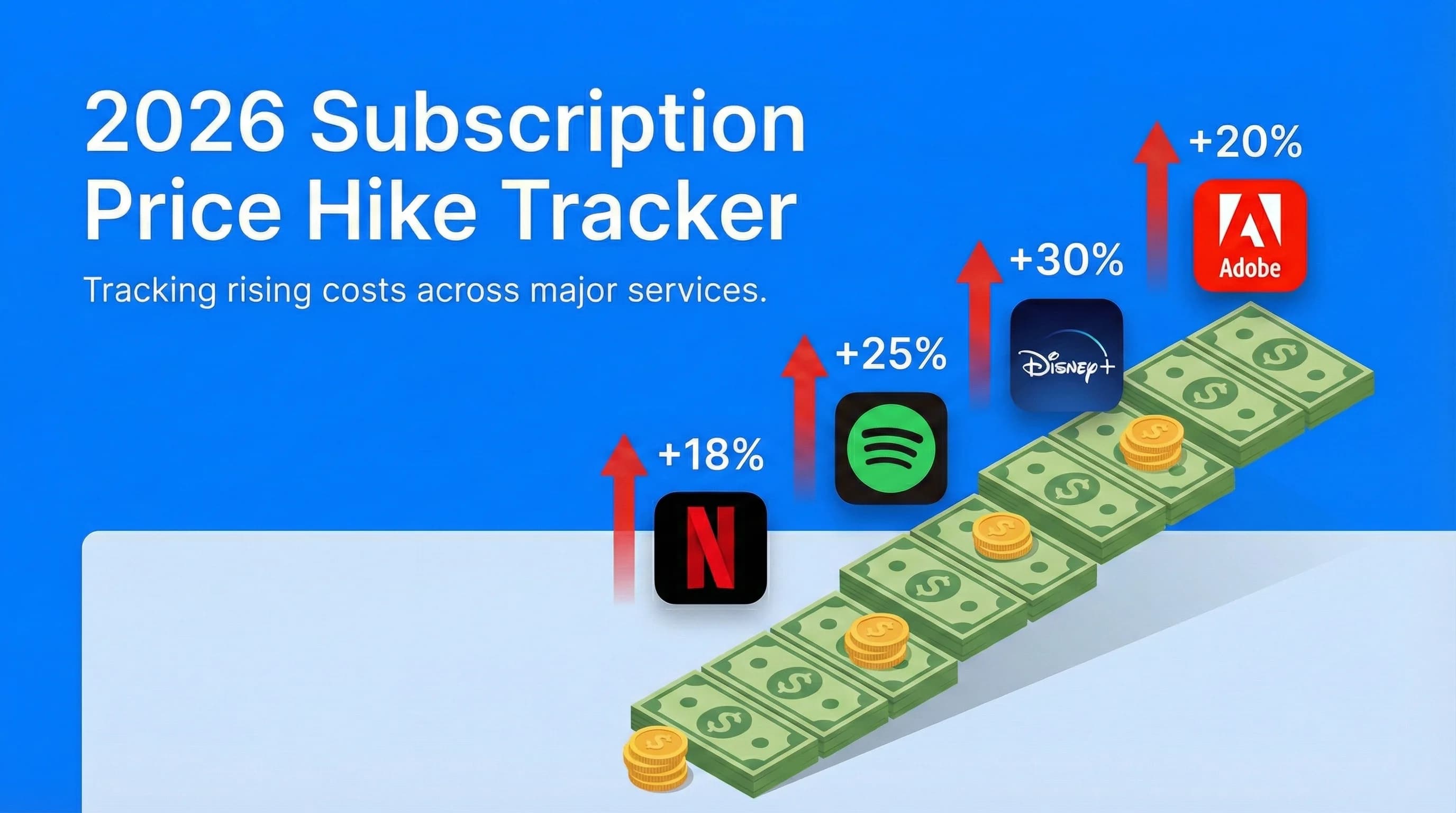
2026 Subscription Price Hike Tracker: Every Service That Raised Prices This Year
Netflix, Spotify, Disney+, Adobe, and other recurring services have all become more expensive heading into 2026. This tracker summarizes confirmed major subscription price increases, when they happened, and how much more you're paying.
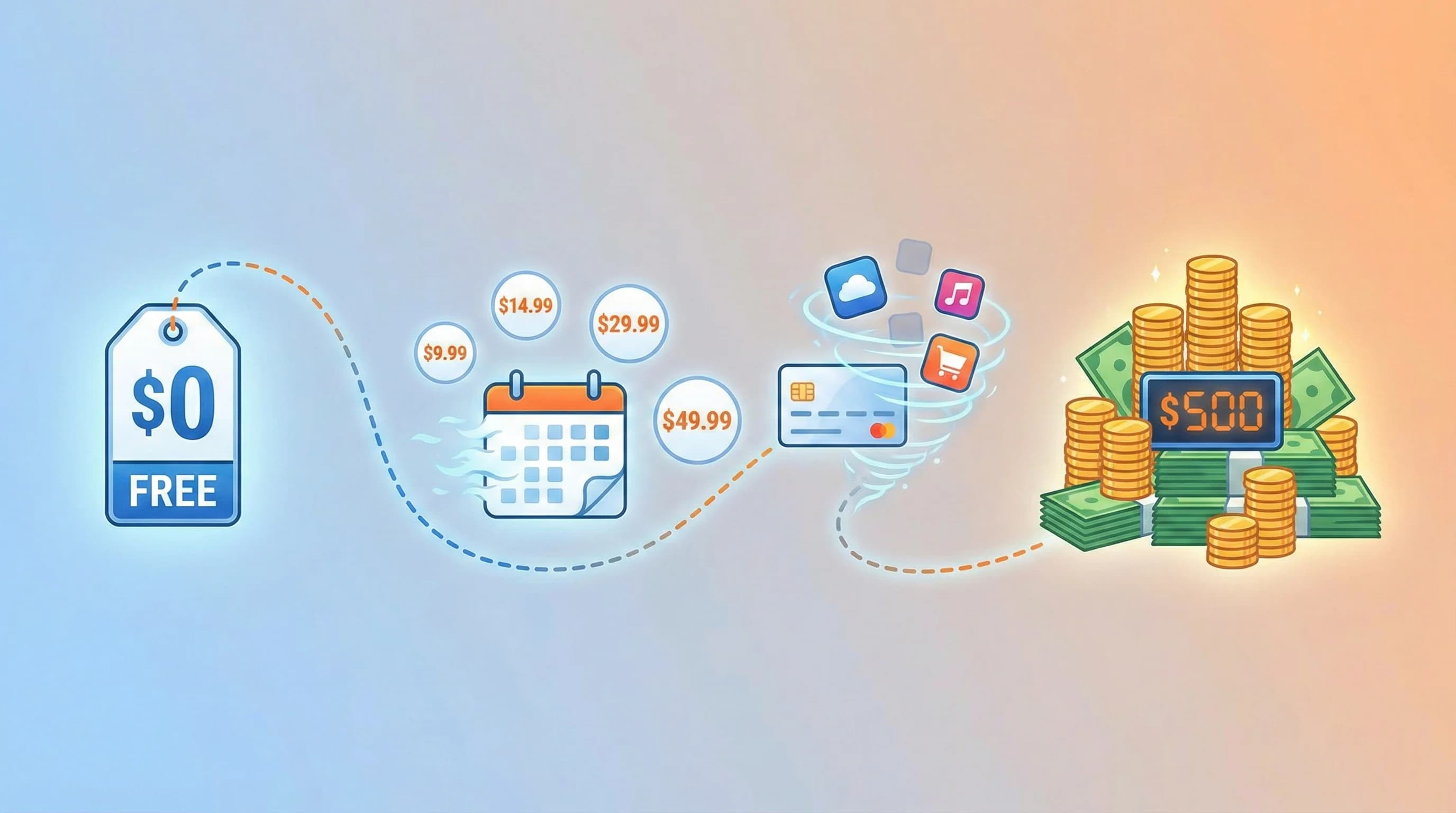
The Hidden Cost of Free Trials: How $0 Becomes $500/Year
That 'free' trial you forgot about? It's not free anymore. Discover how forgotten free trials are costing Americans an average of $500 per year and learn the exact steps to stop the bleeding.
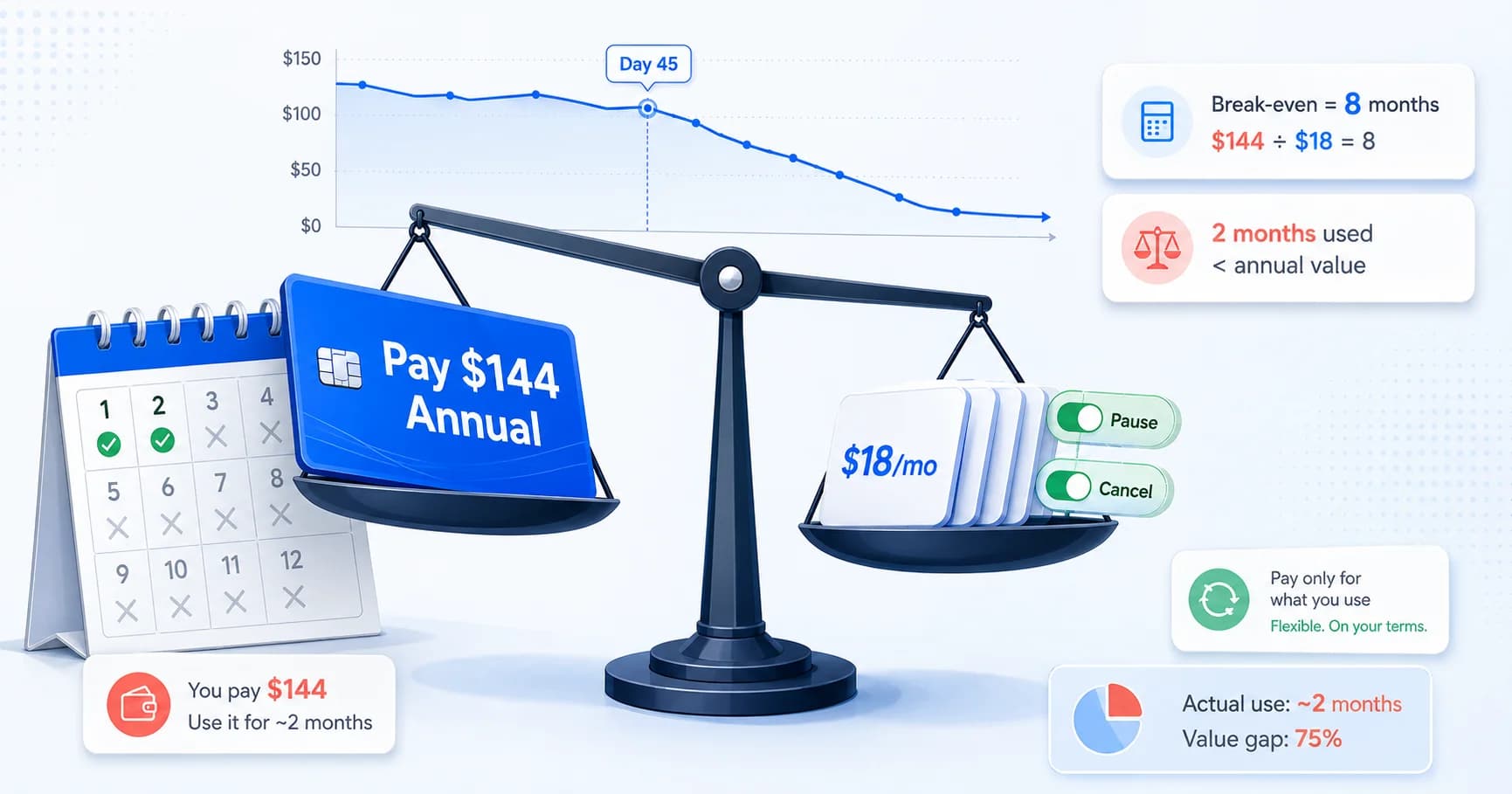
The Annual Subscription Math Trap: Why 'Saving 20%' Costs Most People $300+ in 2026
Annual plans feel like free money until you stop using the app by day 45. Here is the behavioral math behind upfront billing, the break-even formula, and how to know when to pay monthly.